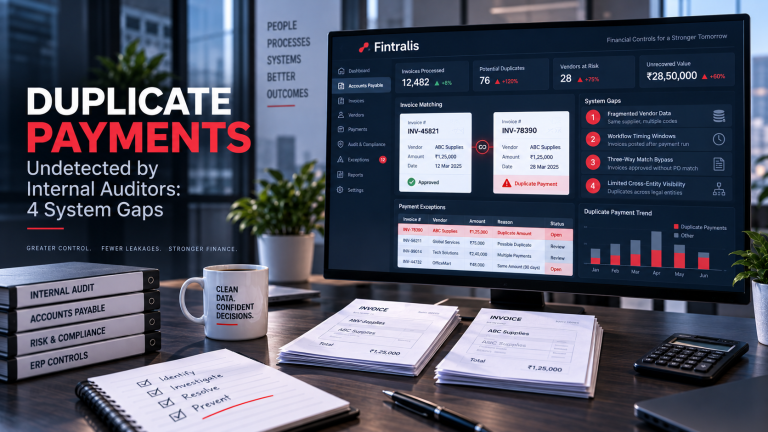
Shared service centres were supposed to eliminate the chaos of decentralised accounts payable. Standardised processes, dedicated teams, consistent systems—all designed to catch errors like duplicate payments before they happen.
Yet finance leaders at organisations with shared service centre AP still find duplicates in the payment population. Not because the model is broken, but because volume and speed create blind spots that controls cannot fully close.
Why Centralisation Does Not Eliminate Duplicates
A shared service centre processes invoices faster than dispersed teams ever could. That speed is the point. It is also where duplicates enter.
High throughput means processors cannot manually verify every invoice against every prior payment. ERP systems flag exact matches—same invoice number, same supplier, same amount within a tolerance—but catch nothing else.
Duplicates that systems miss include:
- Invoices with slightly different reference numbers (supplier appends a letter or changes format)
- Original invoices and copies arriving through different channels (email, portal, EDI, paper)
- The same underlying goods receipt generating invoices from both the supplier and an internal receiving location
- Suppliers resubmitting after payment delays, unaware the first invoice is already queued
- Invoices processed before and after a system migration, with reconciliation gaps
Service-level agreements create further pressure. If the shared service centre commits to processing invoices within 48 or 72 hours, the team cannot spend 30 minutes investigating whether a £12,000 invoice might be a resubmission of one received two months earlier under a different PO number.
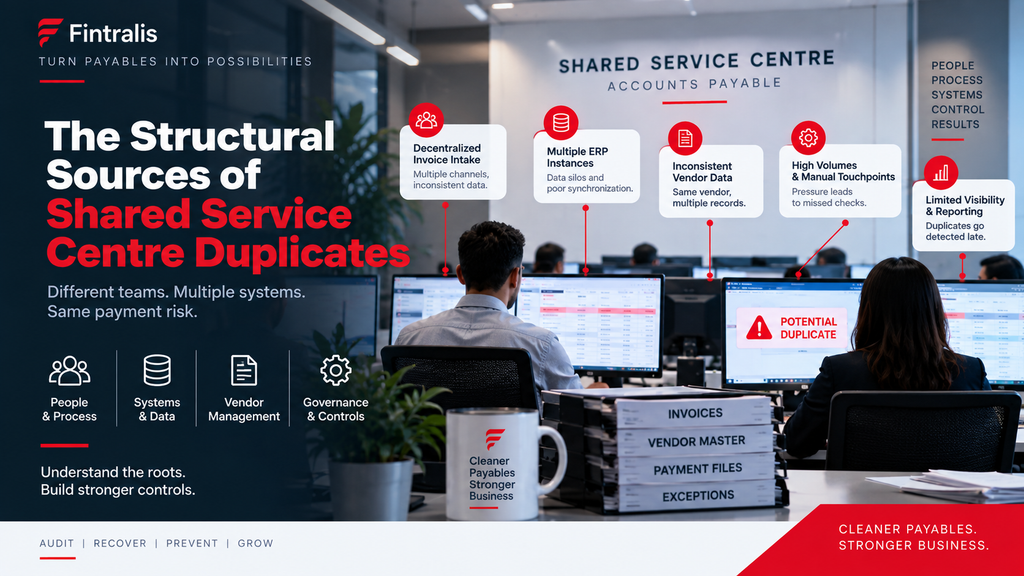
The Structural Sources of Shared Service Centre Duplicates
Centralising AP introduces structural factors that decentralised teams did not face.
Multiple Input Channels
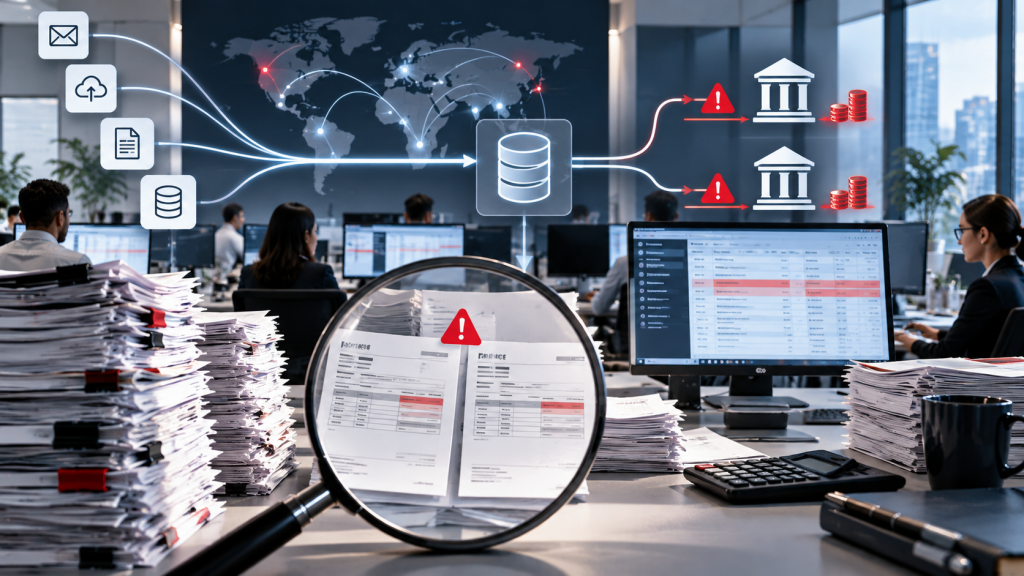
A shared service centre receives invoices from more sources than a site-based AP clerk. Suppliers send invoices by email, upload them to portals, transmit EDI files, and still post paper copies. Internal stakeholders forward PDF scans after receiving them directly. Each channel creates a separate queue. An invoice arriving by email on Monday and as a portal upload on Thursday looks like two distinct items to a processor working from separate inboxes.
Supplier Change and Growth
Adding suppliers during growth phases—or inheriting them in acquisitions—means onboarding organisations that have never worked with your submission standards. They send invoices formatted for their previous clients. Your shared service centre must process them anyway, and variation defeats automated matching.
System Transitions
Migrations from one ERP to another, or consolidations of multiple instances, create reconciliation gaps. Invoices processed in the final days before cutover may not fully sync to the new system. If a supplier resubmits two months later, the new system has no record of prior payment.
Global Operations
Shared service centres serving multiple countries handle currency conversions, VAT variations, and local invoicing requirements. The same transaction might generate invoices in two currencies or from two legal entities within the same supplier group. Without local knowledge, processors treat them as separate obligations.
What Controls Catch and What They Miss
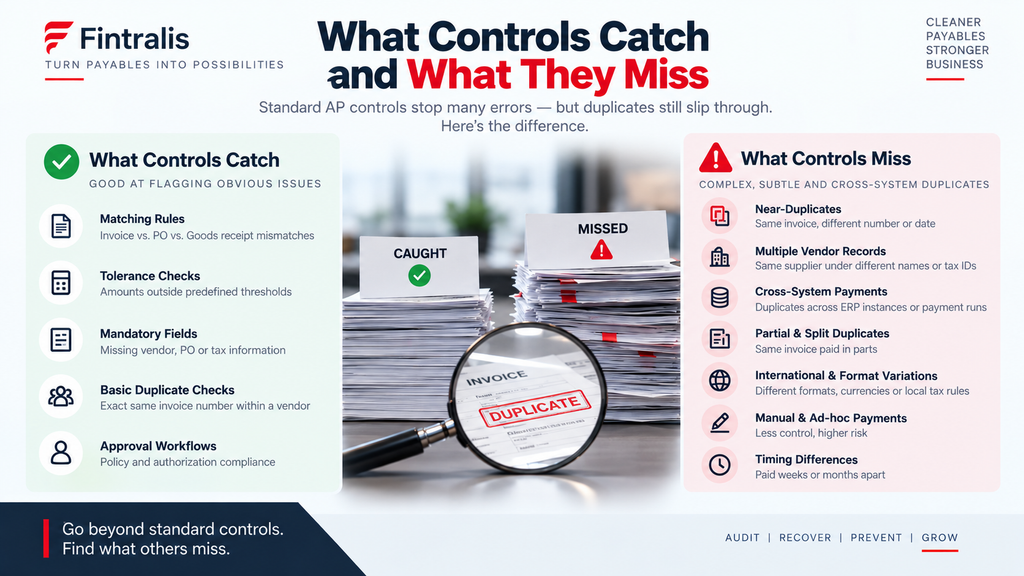
Standard ERP duplicate checks compare invoice numbers and amounts. If both match within a tolerance window, the system blocks posting. This catches exact duplicates, usually originating from a supplier’s own system error.
What these controls do not catch:
- Invoice numbers that differ by a single character or suffix
- The same services invoiced across two monthly billing cycles with overlapping dates
- Freight invoices that reference the same shipment but use different internal codes
- Credit notes issued but not applied, so the replacement invoice gets paid alongside the original
Shared service centres often add secondary checks—manual review of high-value invoices, sampling of supplier accounts, periodic duplicate scans by the ERP system. These catch some additional cases, but the volume and the speed required mean gaps remain.
Recovery Is a Different Problem Than Prevention
Preventing duplicates is an operational priority. Catching and recovering them is a retrospective finance exercise, and few shared service centres have capacity for both.
Internal audit teams lack the time to analyse millions of payment records across multiple years. Even if they flag potential duplicates, recovering the funds requires contacting suppliers, providing proof, negotiating refunds or credits, and tracking applications. That process is time-intensive, and suppliers do not always cooperate promptly.
This is where external recovery audits provide value. Specialists analyse the full payment population, apply matching algorithms that go beyond system-native checks, verify each potential duplicate against underlying documentation, and manage the supplier outreach process.
For organisations running SAP, Oracle or JD Edwards, recovery audits work directly from the ERP data. Because the work is contingency-based, finance teams pay only when funds are recovered. There is no upfront cost and no distraction from daily operations.
When to Consider a Recovery Audit
Shared service centres should review for duplicates after any of these events:
- ERP implementation or upgrade
- Migration to a new shared service model or provider
- Merger or acquisition integrating new suppliers and entities
- Periods of rapid transaction growth
- High staff turnover in the processing team
Even well-managed operations accumulate duplicates over time. The question is not whether they exist, but whether recovering them is worth the effort. On a 100% contingency model, the decision cost is zero.
If your organisation processes £50 million or more in annual accounts payable through a shared service centre, a recovery audit will quantify what slipped through. The findings also reveal process weaknesses—specific suppliers, invoice types or timing patterns that your controls did not address. That information feeds back into prevention.
Frequently asked questions
Why do shared service centres still process duplicate payments?
Shared service centres process high invoice volumes under time pressure, which creates gaps even with standardised procedures. Different invoice formats, supplier reference variations, and timing mismatches between systems mean duplicates enter through legitimate channels. The speed required to meet service-level agreements leaves little room for deep verification on every transaction.
What causes duplicate payments in centralised AP operations?
Duplicates occur when original and copy invoices arrive through different channels, when suppliers resubmit after payment delays, when invoice numbers differ slightly between PO and non-PO invoices, or when system migrations create reconciliation gaps. Multiple receiving locations sending confirmation to a central team also introduces timing issues that trigger double processing.
How do companies recover duplicate payments from shared service centres?
Recovery typically requires external auditors who analyse the full payment population across fiscal years, match transactions using multiple data points beyond invoice numbers, verify genuine duplicates against supporting documentation, and handle supplier outreach for refunds. Internal teams rarely have capacity for this retrospective work while maintaining current operations.
Should finance leaders audit shared service centre AP for duplicates?
Yes, because even well-run operations accumulate duplicates over time, especially after system changes, shared service transitions, or high-growth periods. Contingency-based audits cost nothing upfront and recover funds that would otherwise stay with suppliers. The exercise also reveals process weaknesses worth addressing.
What systems prevent duplicates in shared service centre environments?
ERP systems like SAP and Oracle include duplicate-checking based on invoice numbers and amounts within tolerance windows. However, these controls catch only exact matches. They miss invoices with slightly different numbers, different date ranges, split invoices, or cases where the same goods receipt triggers multiple invoice postings from supplier and receiving site.
How much do companies typically lose to duplicate payments in centralised AP?
Loss rates vary by company size, transaction volume, and process maturity. Organisations processing tens of thousands of invoices annually through shared service centres commonly see recoverable duplicates, particularly during transition periods or after mergers. Recovery audits quantify the actual exposure without making assumptions about rates.