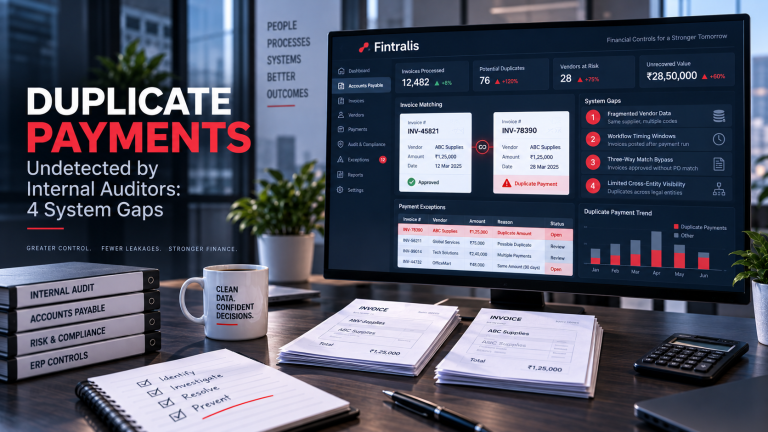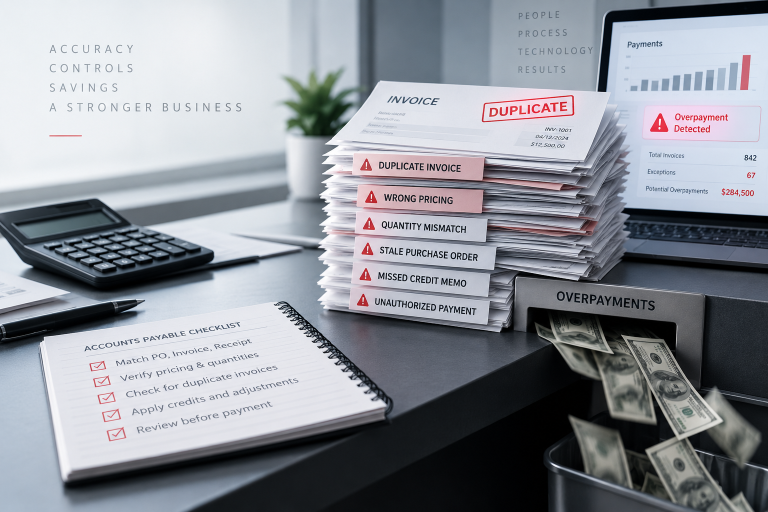

Your organisation runs a duplicate payment audit every few years. The consultant delivers a spreadsheet. AP investigates. You recover a fraction of the identified amount. Two years later, the same duplicates reappear.
The pattern repeats because most recovery projects treat duplicates as accounting mistakes rather than process failures. The real problem is structural, not transactional.
Root Cause One: Vendor Master Chaos

Duplicate payments begin in the vendor master file. One supplier appears five times with slight name variations, different tax identifiers or separate records per division. The ERP cannot correlate invoices across these records, so duplicate detection logic fails before the invoice even posts.
Most audits skip vendor master remediation because it requires cross-functional governance, master data ownership and sustained effort. Recovery teams focus on obvious invoice duplicates — identical amounts, dates and vendor names — because those cases close quickly. The harder work of consolidating supplier records, enforcing naming standards and deactivating obsolete entries stays undone.
Without vendor master discipline, the same structural gaps that allowed duplicates last quarter will allow them next quarter. You recover money once but prevent nothing.
Root Cause Two: Weak Matching Controls

Three-way matching — purchase order, goods receipt and invoice — exists in every major ERP. But enforcement is inconsistent. Some business units require PO linkage; others process invoices on approval alone. Tolerance settings vary. Exception queues grow until someone raises the tolerance bands or overrides the blocks to clear backlog.
Duplicate invoices enter when matching rules contain gaps:
- PO matching is optional for invoices under a threshold, so low-value duplicates bypass controls
- The system checks invoice number and amount but not payment terms, letting the same invoice post twice if terms differ
- Manual invoice entry bypasses duplicate-check algorithms that run only on EDI or scanned files
- AP clerks override duplicate warnings during month-end close pressure without second-level review
These are design choices, not software limitations. The ERP can enforce stricter rules, but process owners choose speed over control. Recovery audits document the resulting duplicates without addressing the matching-rule gaps that created them.
Root Cause Three: Misaligned Incentives
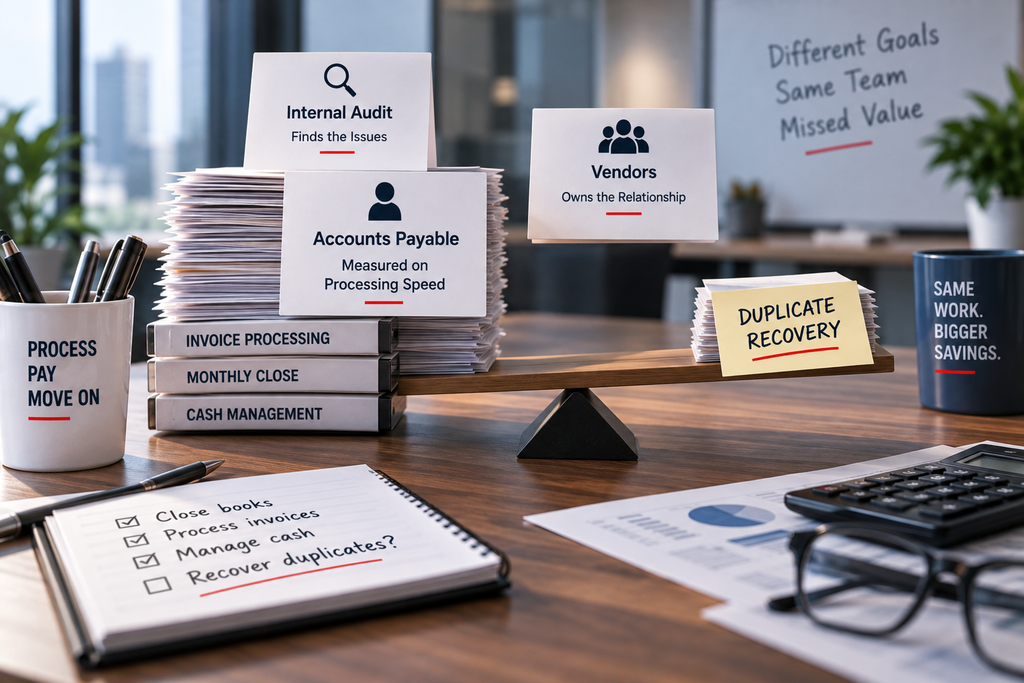
Internal audit identifies duplicate payments but lacks authority to demand vendor refunds. Accounts payable owns the supplier relationship but measures performance on invoice processing speed, not recovery success. No one has a direct financial incentive to pursue small-value duplicates or challenge vendors who resist repayment.
Finance teams face a workload trade-off. Recovering duplicates requires contacting vendors, reconciling payments, negotiating refunds or applying credits to future invoices. That effort competes with closing the monthly books, processing current invoices and managing cash. When the duplicate is two years old and the amount is modest, recovery work loses priority.
This is why contingency-based recovery models deliver better results. The external party absorbs the effort and negotiation friction. The client receives net proceeds without reallocating internal resources. The financial incentive aligns with outcome, not activity.
What Actually Prevents Duplicates
Sustainable duplicate prevention requires four structural changes:
Vendor Master Governance
Centralise vendor master maintenance. Enforce one record per supplier with standardised naming, validated tax identifiers and mandatory duplicate checks before new vendor creation. Deactivate legacy records and consolidate payment histories. This is not a one-time project; it requires ongoing ownership.
Mandatory Matching Rules
Remove optional PO matching. Tighten tolerance bands on amount, date and invoice number. Disable override permissions for duplicate warnings or route them to a second approver. Configure the system to block payment until all three matching points reconcile. Accept the short-term backlog increase to eliminate long-term duplicate risk.
Monthly Exception Reporting
Run automated duplicate-detection scripts monthly, not annually. Review blocked invoices, override logs and unmatched POs as part of the close process. Treat duplicate trends as control defects requiring corrective action, not isolated errors to write off.
Separated Recovery and Prevention Roles
Assign recovery work to a team or partner with direct financial incentive. Keep AP focused on processing, not investigating their own errors. Use recovery results to identify process gaps, then task process improvement teams with closing those gaps. Do not expect the same people who created duplicates to prevent them while also chasing refunds.
The Contingency Model Advantage
Fintralis operates on full contingency: no recovery, no fee. We absorb the workload of identifying duplicates, validating claims, negotiating with vendors and securing refunds or credits. Our incentive aligns with yours — maximum recovery with minimum internal disruption. We work across SAP, Oracle and JD Edwards environments at companies with significant AP spend where even a small recovery percentage justifies the engagement. If you are running another audit cycle and expect the same disappointing results, the model itself may be the problem.
Frequently asked questions
Why do duplicate payment audits often fail to recover money?
Audits fail when they treat duplicates as isolated errors rather than symptoms of process defects. Without fixing invoice approval workflows, vendor master governance and three-way matching gaps, the same duplicates recur. Recovery projects that ignore root causes deliver one-time lists but no sustained improvement.
What causes duplicate payments in ERP systems like SAP or Oracle?
Duplicates stem from poor vendor master hygiene — multiple records for one supplier, inconsistent names and tax IDs — combined with weak invoice matching controls. Manual invoice entry, missing PO linkage and siloed approval processes let identical invoices enter twice. System configuration alone rarely prevents duplicates without workflow discipline.
How do you prevent duplicate payments after a recovery audit?
Prevention requires vendor master deduplication, mandatory PO-invoice matching rules in the ERP, blocked-invoice review protocols and monthly exception reporting. Finance must close duplicate vendor records, enforce single naming conventions and require matching on three data points before payment release. One-time audits change nothing without these controls.
Should internal audit or accounts payable run duplicate payment recovery?
Neither team has the right incentive structure. Internal audit lacks recovery enforcement tools and AP teams face workload conflicts when auditing their own process. External contingency-based recovery aligns financial incentive with results and removes internal politics from the project. The best model separates recovery execution from process ownership.
What ERP configuration mistakes cause the most duplicate payments?
Weak vendor master validation rules, missing mandatory PO matching and disabled duplicate-check algorithms cause most ERP duplicates. Many organisations turn off system duplicate warnings because they generate false positives, then rely on manual review that fails under volume. Tolerance settings on amount and date matching are often too loose or inconsistently applied across entities.