
Your AP automation platform routes invoices faster. It cuts approval cycles. It improves visibility. But it probably isn’t finding the $2M to $5M in supplier overcharges and contract drift sitting in your paid transaction history.
Most finance leaders assume that if an invoice clears three-way matching and gets paid through an automated workflow, it must be correct. That assumption is expensive.
What AP automation actually does

AP automation platforms—whether standalone or embedded in your ERP—digitize the procure-to-pay process. They capture invoices, extract line-item data, match against purchase orders and goods receipts, route exceptions for approval, and trigger payment files.
This delivers measurable value: fewer data-entry errors, faster cycle times, better audit trails, reduced manual workload. These tools are excellent at validating that the invoice matches the PO and that someone approved the PO.
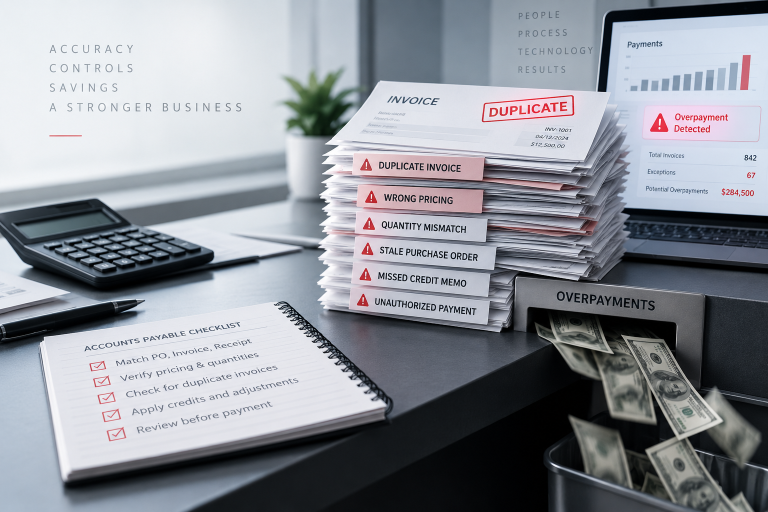
What they do not do is verify that the PO itself reflected the correct contracted rate, that the supplier applied the right tier pricing, that quantity breaks were honored, or that you weren’t billed twice for the same service under different invoice numbers across separate entities.
The forensic gap

Three-way matching confirms consistency between three documents. It does not confirm correctness against the commercial agreement that governs pricing.
If a supplier quotes you a rate, you issue a PO at that rate, and the invoice matches the PO, the automation platform sees a clean transaction. If the quoted rate was higher than your contracted rate, or if the supplier ignored a volume rebate tier you had reached, the system will never flag it.
Forensic AP recovery starts where automation stops. It compares paid invoices to:
- Master service agreements and rate cards
- Negotiated pricing schedules and discount tiers
- Purchase volumes that trigger contractual rebates
- Category benchmarks for commodities with transparent index pricing
- Cross-entity transaction patterns to spot duplicate invoices with different reference numbers
This requires subject-matter expertise in logistics, utilities, telecom, waste services, and other categories where pricing is complex and supplier billing errors are common. It also requires access to contract terms that live outside your ERP—often in PDF files managed by procurement—and the analytical capacity to reconcile millions of invoice lines against those terms.
Where the money hides
Recoverable dollars concentrate in a few predictable areas:
Contract rate drift. A supplier renegotiates rates annually, but the new rate sheet doesn’t make it into every PO template or every buyer’s system. Invoices continue at the old rate for months. Automation sees matching documents and pays them.
Tier and volume failures. Your agreement specifies that once monthly volume exceeds a threshold, a lower per-unit rate applies. The supplier bills at the higher rate anyway, either by mistake or by policy unless challenged. Three-way matching doesn’t calculate cumulative volume.
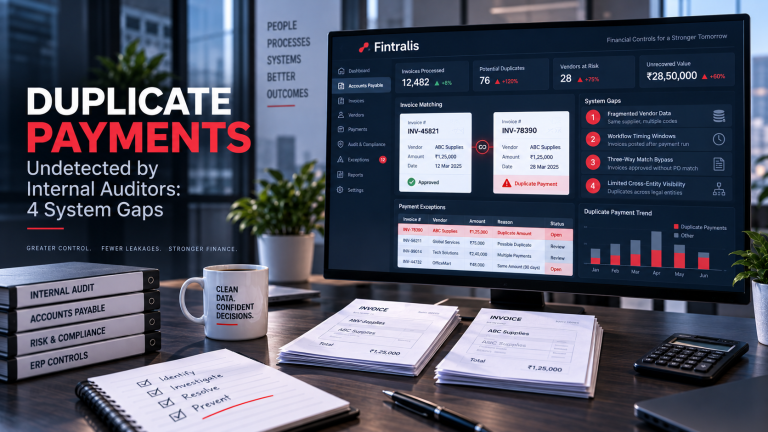
Duplicate payments across entities. A shared service gets billed to two subsidiaries under slightly different descriptions or invoice numbers. Each entity processes its own invoice. Both clear matching and both get paid. Detecting this requires cross-entity transaction analysis that single-instance automation doesn’t perform.
Commodity index lag. Fuel surcharges, metal pricing, and other index-linked costs should adjust monthly. Suppliers lag the decrease and accelerate the increase. Unless someone is benchmarking your actual charges against the published index, you overpay the delta.
Billing for services not rendered. Waste hauling billed for a bin that was removed. Telecom lines billed months after disconnect. These require matching invoice line items to asset registers and service tickets, not just to POs.
Why CFOs don’t catch this internally
Your AP team is measured on processing speed and accuracy of data entry, not on whether each line item reflects the best available price. Procurement negotiates contracts but rarely audits invoices after the PO is cut. Internal audit samples transactions for policy compliance, not for pricing correctness against commercial terms.
Forensic AP work is labor-intensive, requires category expertise, and produces uncertain results—sometimes you find millions, sometimes very little. It doesn’t fit neatly into anyone’s existing job description, and building an internal team to do it properly competes with other finance priorities.
What contingency recovery changes
Contingency-based AP recovery removes the cost and resource gamble. The recovery firm extracts your paid invoice data, performs the forensic analysis, identifies overcharges, and pursues recovery directly with suppliers. You pay only a percentage of what actually comes back.If the audit finds nothing material, you pay nothing. If it finds $3M, you keep the majority and pay a fee on the recovery. The model aligns incentives and eliminates the need to staff, train, or redirect internal resources.For organizations running SAP, Oracle, or JD Edwards, the data extraction and analysis layer integrates cleanly without disrupting your production environment. The work happens offline. Recoveries flow back as supplier credits or checks.
Automation and recovery are not alternatives
AP automation makes your process faster and more controlled going forward. Forensic recovery recoups money already lost and surfaces systemic issues—contract gaps, supplier behavior patterns, procurement process weaknesses—that you can fix to prevent future leakage.
One looks forward, one looks backward. Both belong in a well-run finance operation.
If your AP spend exceeds $50M annually and you haven’t run a forensic recovery audit in the past two years, the statistical likelihood is that recoverable dollars are sitting in your transaction history. Fintralis works on contingency across SAP, Oracle, and JD Edwards environments. You can reach us through the contact page if you want to discuss whether a recovery engagement makes sense for your organization.
Frequently asked questions
What do AP automation platforms typically miss in accounts payable processing?
AP automation platforms excel at workflow digitization and approval routing but typically miss supplier overcharges, contract rate drift, duplicate payments across entities, and category-specific pricing errors. These require transaction-level forensic analysis that compares what you paid against what your contracts actually stipulate, not just whether the invoice matched the PO.
Why can’t standard AP automation software detect all overpayments?
Standard AP automation validates that invoices match purchase orders and receiving documents, but it doesn’t audit whether the PO itself reflected correct contracted rates, whether quantity breaks applied, or whether suppliers honored negotiated terms. The system approves anything that passes three-way matching, even if the underlying price is wrong.
How much money do mid-market companies typically leave unrecovered in accounts payable?
Companies with $50M+ in annual AP spend often have $2M-5M in recoverable overcharges and compliance failures sitting in paid invoices. The exact amount depends on contract complexity, supplier count, commodity exposure, and how long since the last forensic AP audit.
What is forensic accounts payable recovery?
Forensic AP recovery is a line-by-line audit of paid invoices against contract terms, rate cards, purchase agreements, and category benchmarks to identify supplier overcharges, duplicate payments, and billing errors that standard AP workflow systems don’t catch. Recoveries are pursued on contingency so there’s no cost if nothing is found.
Should a company use both AP automation and forensic recovery services?
Yes. AP automation improves processing speed and reduces manual approvals going forward. Forensic recovery audits historical paid invoices to reclaim money already lost and identifies systemic issues to prevent future leakage. They address different problems and complement each other when both are deployed.
How does contingency-based AP recovery work for large ERP environments?
The recovery firm extracts paid invoice data from your SAP, Oracle, or JD Edwards environment, performs forensic analysis against contracts and rate tables, identifies overcharges, and works directly with suppliers to recover funds. You pay only a percentage of actual recoveries, so there is no upfront cost or risk if the audit finds nothing material.