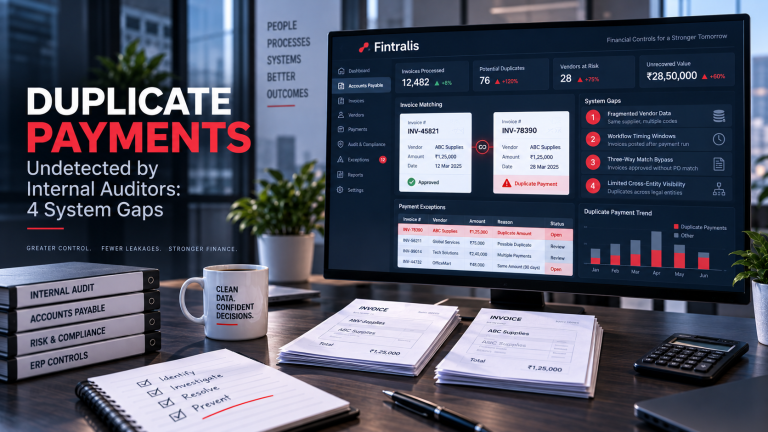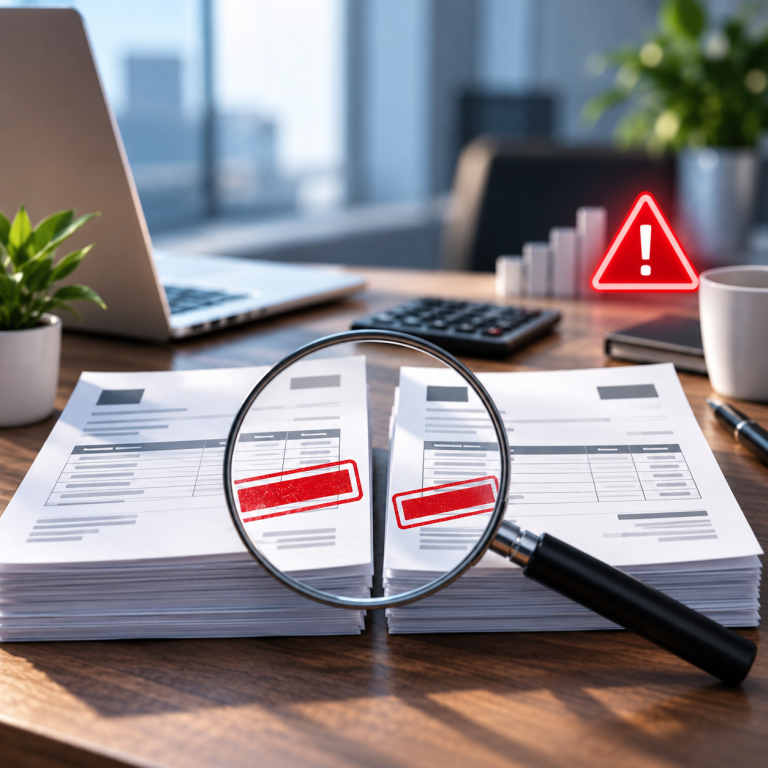

JD Edwards Enterprise One handles thousands of invoice entries, three-way match exceptions and payment batches every month. AP teams rely on workflow approvals, voucher matching and payment tolerances to keep the process moving. But those same controls often let duplicate payments, unmatched credits and pricing variances slip into the payment queue without triggering an alert.
Why Standard JDE Controls Miss Duplicate Invoices

JD Edwards validates invoice numbers against vendor master records. If your AP Constants are set to enforce unique invoice numbers per supplier, the system rejects a second entry with an identical reference. That rule works when vendors use consistent numbering and your AP staff enter data without typos.
In practice, a supplier may reissue an invoice with a revised number after a dispute, or append a suffix to distinguish a partial shipment. Your receiving clerk keys the PO number incorrectly, or the OCR software that feeds voucher entry reads a smudged digit as a different character. JDE treats each variant as a new transaction and routes it through approval. The original payment and the duplicate both clear because no automated cross-check compares payment amounts, dates and line-item detail across voucher history.
Three-way matching adds a layer of control by reconciling the purchase order, receiving document and invoice. But once all three documents align, JDE releases the voucher for payment. If a vendor submits two invoices that both reference valid PO and receipt numbers—perhaps because they billed separately for freight or applied an interim price increase—the system processes both unless someone manually reviews payment history for that supplier within the same period.
How Unmatched Credits Accumulate in Payables Sub-Ledgers
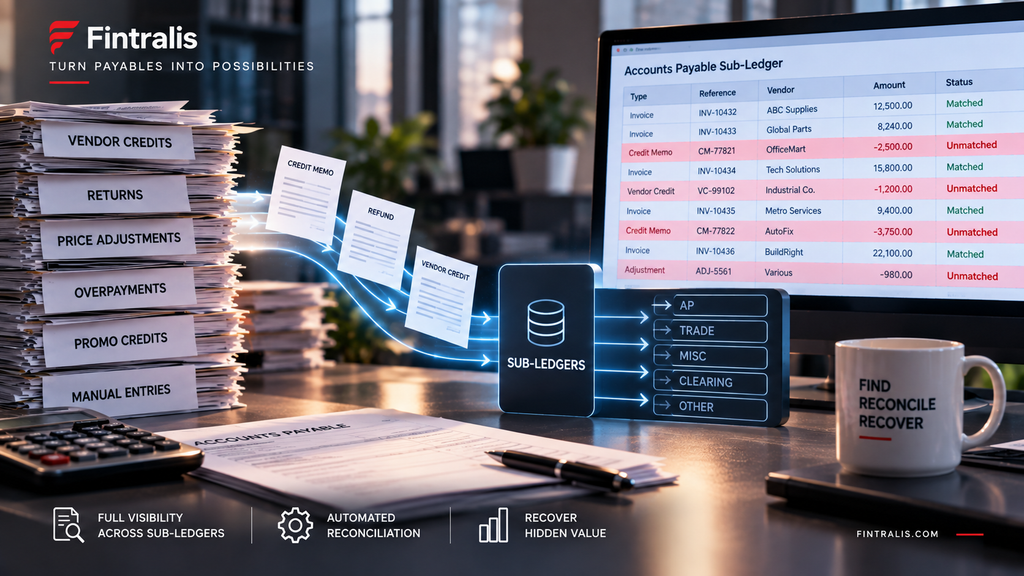
Returns, pricing adjustments and duplicate-payment recoveries generate credit memos that post to your AP sub-ledger. JDE records the credit as an open payables item, but it does not automatically offset the original invoice unless your AP team manually matches the voucher or creates a balancing entry.
High-volume AP departments prioritise clearing the payment queue. Credits sit in the open-items file until month-end reconciliation or a vendor statement review forces someone to investigate. By that time, the original invoice may be archived, the buyer who authorised the PO has moved to another role, and the vendor contact who issued the credit has changed. Matching the credit requires digging through payment history, email trails and receiving logs that are not linked in the ERP.
Some companies apply credits against future invoices from the same vendor, which reduces the visible payables balance but leaves the original overpayment unrecovered. The cash impact is the same: you paid twice, received one credit, and the net loss remains on your books as an accounting reconciliation item rather than a recovered payment.
Where Pricing Errors Bypass AP Review
Purchase orders in JD Edwards capture unit price, quantity and any negotiated discounts. When the invoice arrives, the system compares invoice price to PO price within a tolerance threshold—often two or three percent. If the variance falls inside that window, JDE auto-approves the voucher.
Suppliers occasionally apply list price instead of contract price, or invoice for a higher-tier service level than the PO specifies. The variance is small enough to pass tolerance, the invoice matches the PO and receiving document on quantity, and the payment processes without manual review. Over dozens of invoices, those small overcharges add up, but no standard JDE report flags them because the system considers the match valid.
Freight and handling charges introduce another gap. Many purchase orders list freight as a separate line item with a placeholder amount, and the actual carrier invoice posts after shipment. If the carrier charges more than the PO estimate, JDE compares the freight line to the PO and may auto-approve if the variance is within tolerance. AP staff see a matched voucher and assume the freight charge is correct, even if the carrier applied a higher rate class or billed for residential delivery when the shipment went to a commercial dock.
Why Manual Reconciliation Alone Will Not Close the Gap
Finance teams run AP aging reports, vendor statement reconciliations and duplicate-invoice queries as part of monthly close. Those reviews catch obvious duplicates—identical invoice numbers paid twice in the same period—but they do not surface near-duplicates, unmatched credits posted to the wrong vendor account, or pricing variances that fell within tolerance.
A thorough audit requires comparing payment data across multiple fields: vendor ID, invoice date, invoice amount, PO number, payment date and line-item detail. JDE does not index payment history for this kind of cross-field fuzzy matching, and the standard AP Ledger Inquiry report requires manual filtering of each vendor. For a company processing thousands of invoices per month, that manual review is not scalable.
What a Structured Recovery Audit Uncovers
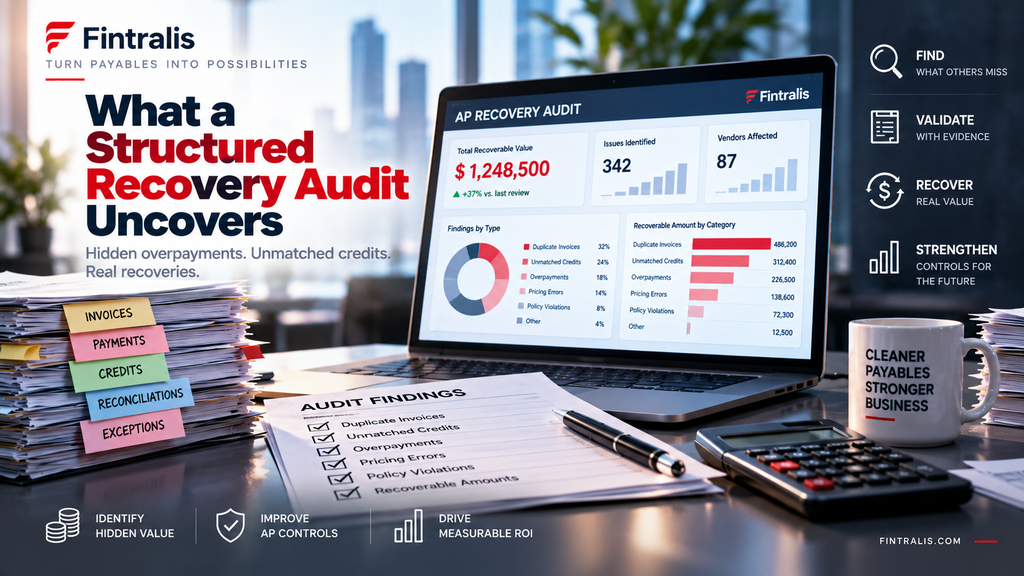
Accounts payable recovery specialists export payment history from JD Edwards and run it through matching algorithms that compare invoice amounts, dates, PO references and vendor details across the entire dataset. The analysis flags duplicate payments where invoice numbers differ by a single character, unmatched credits that posted to supplier accounts with similar names, and pricing variances that individually stayed within tolerance but collectively indicate a systemic error.
Once potential duplicates are identified, the recovery team pulls voucher images, PO documentation and receiving records from your JDE archive or document management system. They verify each match, contact the vendor to request a credit or refund, and track the recovery through to payment. The process does not rely on your AP staff to add another reconciliation task to month-end close, and it operates on a contingency basis, so there is no upfront cost or software license.
If your company processes $50 million or more in annual accounts payable through JD Edwards and you have not run a structured duplicate-payment audit in the past two years, unmatched credits and hidden overpayments are likely sitting in your payment history. A recovery audit recovers that cash without disrupting your AP workflow or requiring changes to your ERP configuration.
Frequently asked questions
Why does JD Edwards allow duplicate payments to go through?
JD Edwards relies on voucher matching rules that check invoice number and vendor ID, but many duplicates use slightly different invoice numbers, PO references or payment terms. The system processes them as separate transactions unless someone manually cross-references payment history or runs exception reports that most teams don’t schedule regularly.
How do unmatched credits accumulate in JDE accounts payable?
Credits from returns, pricing adjustments or duplicate payments often post to AP sub-ledgers without automatic matching to the original invoice. JDE requires manual voucher matching or offsetting entries, and if AP staff process high volumes, these credits sit as open items until a reconciliation cycle or vendor statement review forces the issue.
What JD Edwards reports show potential overpayments?
The standard AP Ledger Inquiry and Open Payables reports can surface duplicate vendor references, but they require manual filtering. The Payment History Detail report shows multiple payments to the same vendor in a date range, and the Voucher Match Selection report highlights unmatched receipts, though neither flags duplicates automatically without custom user-defined code logic.
Can JD Edwards prevent duplicate invoice entry automatically?
JDE can enforce unique invoice number validation per vendor in the AP Constants setup, but this only works if vendors use consistent numbering. If a vendor reissues an invoice with a revised number or your AP team enters a typo, the system treats it as new. Custom business functions or third-party bolt-ons can add fuzzy matching, but the base product doesn’t include this.
How often should finance teams audit JD Edwards payment files for duplicates?
Most recovery audits find the highest concentration of duplicates in the trailing twelve to thirty-six months, when AP volume was high or staff turnover occurred. Running a structured duplicate-payment analysis quarterly catches issues while vendor records are still accessible, but a full historical review typically requires specialized tools that parse payment data outside the standard JDE reporting suite.