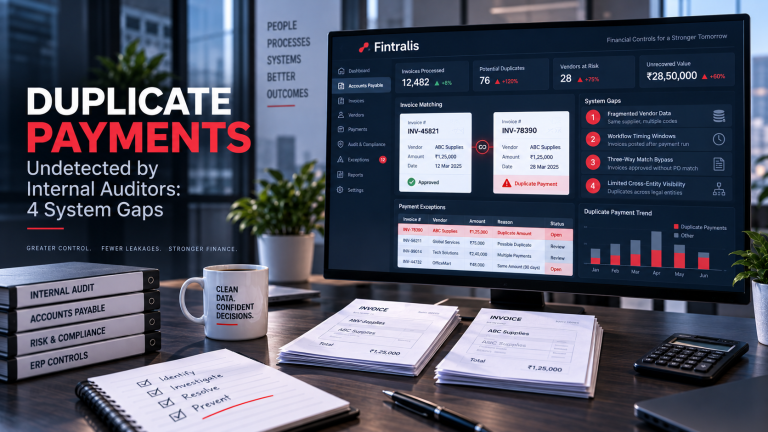

Oracle’s accounts payable module includes duplicate invoice checking. It compares supplier ID, invoice number and invoice amount against recent history. When all three match, the system blocks the invoice or flags it for review.
This catches some duplicates. Not most.
Where Oracle’s Native Controls Stop
The standard duplicate check works only when data entry is perfectly consistent. A single character difference in the invoice number creates a new record. An invoice amount that’s off by a cent—common with tax calculations—passes through. The same invoice entered under two different vendor numbers in your supplier master bypasses the check entirely.
Oracle compares within a rolling time window, typically thirty to ninety days. Suppliers who resubmit invoices after four months won’t trigger the duplicate flag. The system has no memory of the earlier payment.
Purchase order matching adds another layer, but creates its own gaps. When an invoice arrives before goods receipt is posted in the system, AP staff might park the invoice manually. The same invoice arrives again two weeks later through EDI. The earlier manual entry and the EDI transmission don’t connect—different document numbers, different entry paths.
Common Duplicate Scenarios That Bypass Detection
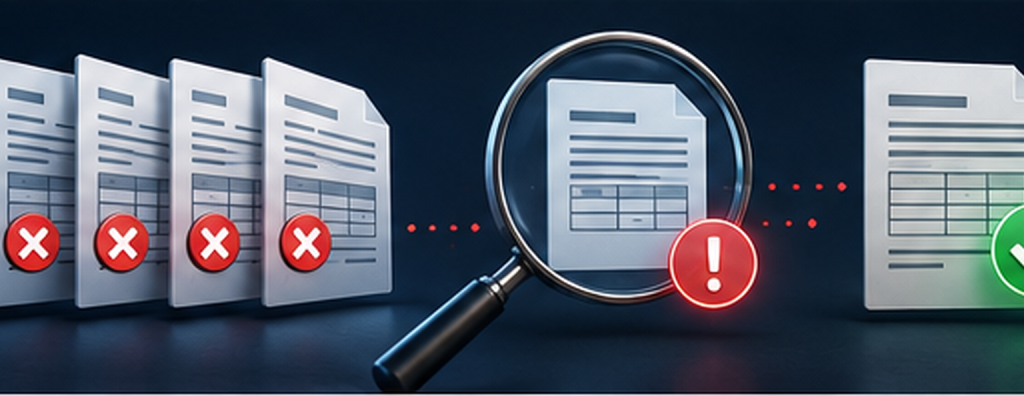
Invoices that enter through multiple channels create the highest duplicate risk. A supplier emails a PDF to accounts payable. The same invoice arrives via your supplier portal. A third copy comes through EDI. Each channel creates a separate document in Oracle unless someone manually connects them. When processing volumes are high, that doesn’t happen.
Invoice splitting generates duplicates when AP staff allocate a single invoice across cost centers or company codes. The original invoice posts to one entity. A duplicate posts to another. Oracle sees these as separate transactions because they hit different ledgers.
Credit memos complicate detection. A supplier issues a credit for returned goods. They also resubmit the original invoice with a reduced amount. Both the credit and the new invoice process. The original invoice was already paid. You now have a credit memo you’ll never use and a duplicate payment for the net amount.
Supplier master data quality drives many duplicates. The same supplier exists in your system under multiple vendor IDs—variations in legal name, different remittance addresses, separate records for each division. Oracle can’t connect invoices across these separate identities. Its duplicate checking works only within a single vendor ID.

What Happens After Payment
Duplicate payments that clear all controls and post successfully create two problems. First, you’ve paid twice for one obligation. Second, your supplier now owes you a refund, and most won’t initiate that conversation.
Some suppliers catch the duplicate and issue a credit memo without prompting. Most don’t. Accounts payable at your supplier operates under the same volume pressures you face. They process incoming payments against open invoices. When both payments match legitimate invoices in their system—because you entered the same invoice twice—everything balances. Your supplier has no alert, no exception, no reason to investigate.
This is why duplicate payments remain undetected for years. Your records show two separate invoices paid appropriately. Your supplier’s records show two invoices collected appropriately. No monthly statement reconciliation will surface the issue unless someone compares the underlying obligation—one purchase order, one delivery, one service period—against total payments.
Detection Requires Different Logic
Finding duplicates after payment means looking at what Oracle’s real-time controls cannot see. The analysis runs backward from payments to supporting documents: purchase orders, receiving records, contracts, service confirmations. When two payments trace to the same underlying obligation, one is duplicate regardless of how differently they appear in your transaction log.
This approach catches duplicates that cleared all preventive controls because it ignores the data entry fields that prevention relies on. Invoice number differences don’t matter. Amount variations don’t matter. Time gaps don’t matter. The question is simpler: did you fulfill one obligation but pay twice?
The analysis must run across your full vendor master, including all the duplicate supplier records that fragmented matching created. It must look across company codes when you operate multiple entities. It must span multiple fiscal years because the time window for detection extends as far back as your records allow.

Recovery Without Internal Resources
Identifying duplicates is one step. Recovering the funds is another. Your AP team already operates at capacity. Adding duplicate recovery to their workload means other priorities suffer. Pulling together documentation, contacting suppliers, negotiating refunds and tracking credits requires dedicated attention.
Contingency-based recovery services exist specifically for this gap. The service provider performs the analysis using your payment data, identifies duplicates, handles all supplier communication, and manages recovery through to receipt of funds. You pay only when money comes back. If the analysis finds nothing, you pay nothing.
For companies processing millions in annual AP spend through Oracle, the question isn’t whether duplicates exist. The question is whether you’ll invest the time to find them, or continue funding your suppliers’ windfall.

Frequently asked questions
How do duplicate payments happen in Oracle?
Duplicate payments in Oracle typically occur when invoices enter through multiple channels—EDI, email, portal—without matching. System timing issues between PO receipts and invoice matching also create duplicates. Invoice format variations prevent Oracle’s fuzzy matching from catching identical obligations. Manual invoice entry compounds the problem when AP staff process the same document twice under slightly different vendor numbers.
What duplicate payment controls does Oracle include?
Oracle includes duplicate invoice checking based on supplier ID, invoice number and amount. The system flags exact matches within a configurable time window. However, it doesn’t catch invoices with minor variations in amount, invoices split across cost centers, or duplicates from the same supplier under different vendor master records. These controls work only when data entry is consistent.
Can you recover duplicate payments after they’ve been made?
Yes, duplicate payments remain recoverable for years after payment, though older duplicates require more documentation. Recovery requires matching payment records against underlying obligations, identifying which payment lacks proper support, and working with suppliers to obtain refunds or credits. Contingency-based services handle this process without upfront cost, taking payment only when funds are recovered.
How often should companies check for duplicate payments?
Companies with high transaction volumes should run duplicate payment analysis quarterly at minimum. Annual AP spend above one hundred million warrants quarterly or continuous monitoring. One-time historical audits going back three to five years often uncover systematic issues that justify ongoing prevention measures. The detection frequency should match your invoice processing volume and complexity.
What’s the difference between duplicate payment prevention and detection?
Prevention happens before payment—configuring Oracle controls, training AP staff, and establishing invoice matching rules. Detection happens after payment by analyzing what actually went out the door. Most companies focus on prevention but need both. Detection finds where prevention failed and identifies systematic gaps that prevention alone won’t fix. Historical detection also recovers funds to offset the cost of prevention improvements.
Do duplicate payments indicate fraud?
Most duplicate payments result from process breakdowns rather than fraud. Multiple invoice submission channels, supplier master data quality issues, and timing gaps between receipt and invoice create duplicates without any intent to defraud. However, patterns of duplicates to specific suppliers or from specific processors warrant investigation. Recovery work occasionally uncovers intentional schemes, but the vast majority reflect operational issues.