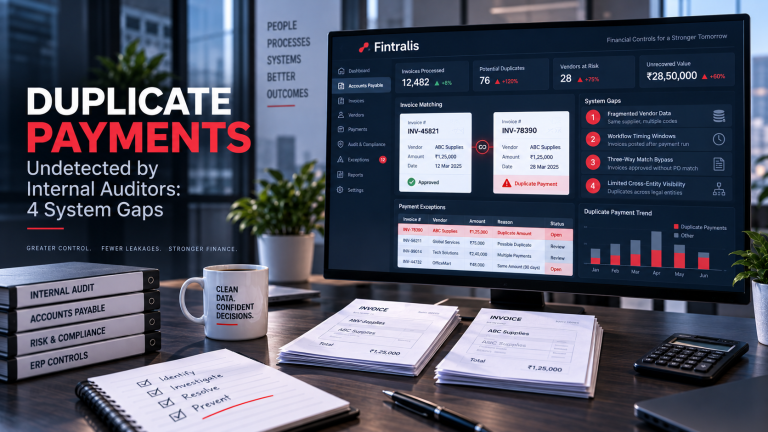
Your ERP system is built to prevent duplicate payments. Standard SAP, Oracle and JD Edwards configurations include vendor master controls, invoice number matching and three-way match logic. Yet duplicate payments still occur, often in predictable patterns that trace directly to how these platforms handle workflow timing, data imports and multi-entity operations.
Workflow Timing Windows
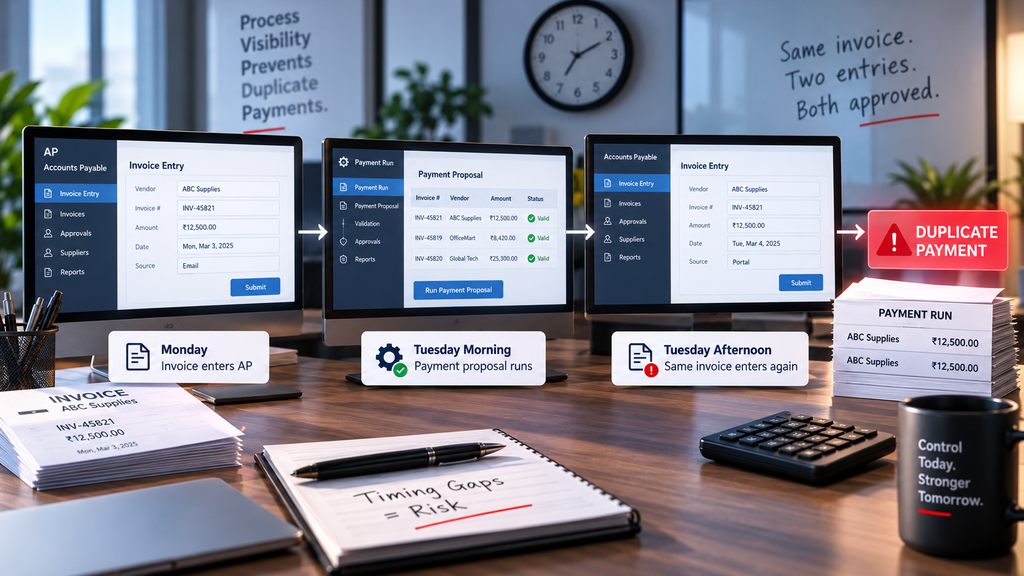
The gap between invoice entry and payment run execution creates the primary duplicate opportunity. An invoice enters AP on Monday. A payment proposal runs Tuesday morning. The same invoice, entered through a different channel or by a different AP clerk, arrives Tuesday afternoon. Both clear validation because neither existed when the other was checked.
This timing issue intensifies in organizations running payment cycles multiple times per week or processing high invoice volumes. The faster your payment cadence, the narrower your detection window becomes. EDI invoices, email attachments and manual entries all flow through different validation queues with different processing speeds.
Multi-Entity Structures and Shared Vendors
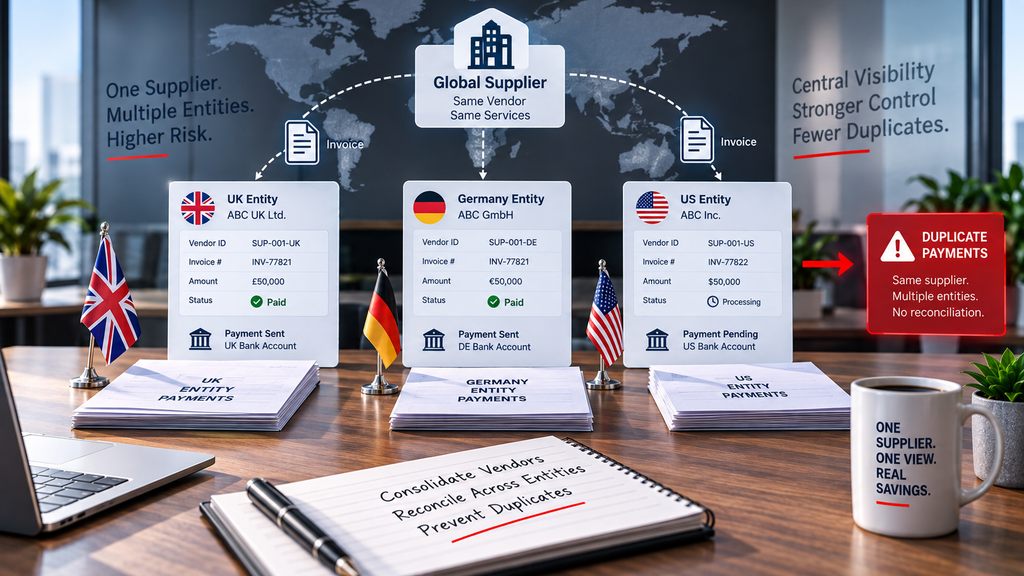
Companies operating multiple legal entities face duplicate risk when subsidiaries maintain separate vendor masters for the same economic supplier. A service provider invoices both your UK and German entities for what should be a single global contract. Without cross-entity reconciliation, both entities process payment.
Shared service centre consolidation compounds this. When you centralize payment operations but vendor master harmonization lags behind, you inherit duplicate payment paths built into your entity structure. The vendor master shows different codes, different addresses or different bank details for what your procurement team knows as one supplier relationship.
Data Import and Migration Events
System cutovers create payment obligation ambiguity. Your legacy system shows an invoice as paid during the migration weekend. Your new ERP imports the same invoice as an open item because the payment transaction didn’t migrate cleanly or fell outside the cutover scope. Both systems believe they hold the correct status.
Batch data loads from subsidiary systems bypass the real-time duplicate checking your ERP applies to manual entry. A monthly consolidation import brings 5,000 invoices. Standard duplicate detection compares each new invoice against existing records, but not against other invoices within the same import batch. Two identical invoices in that batch both clear validation.
Vendor Master Data Quality
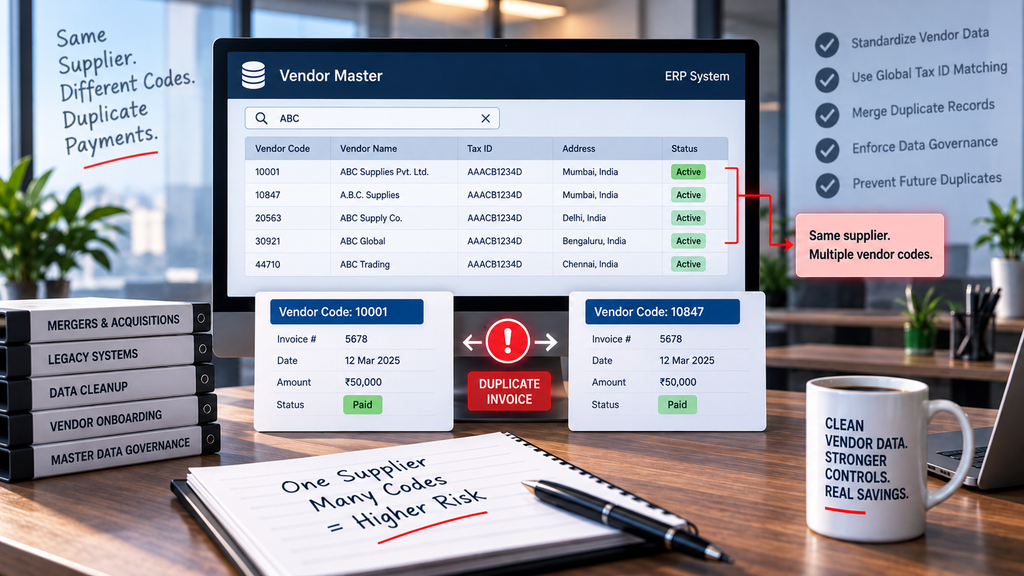
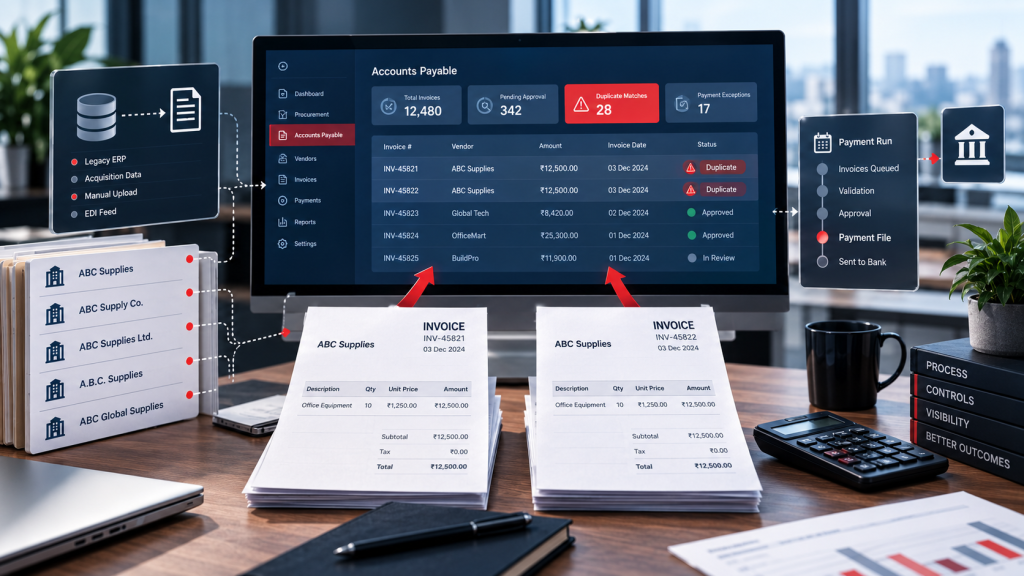
A single economic supplier existing under multiple vendor codes defeats invoice-number-based duplicate detection. Your ERP checks for duplicate invoice numbers within a vendor code, not across all codes. When Supplier ABC exists as vendor 10001 and 10847 because of a legacy merger or data quality issue, invoice 5678 can exist under both codes simultaneously.
Variant names create the same problem. “ABC Limited,” “ABC Ltd” and “ABC Services Limited” may represent one legal entity, but exist as three vendor master records. Address changes compound this — a supplier relocates, and AP creates a new vendor code rather than updating the existing master record.
Three-Way Match Bypass Scenarios
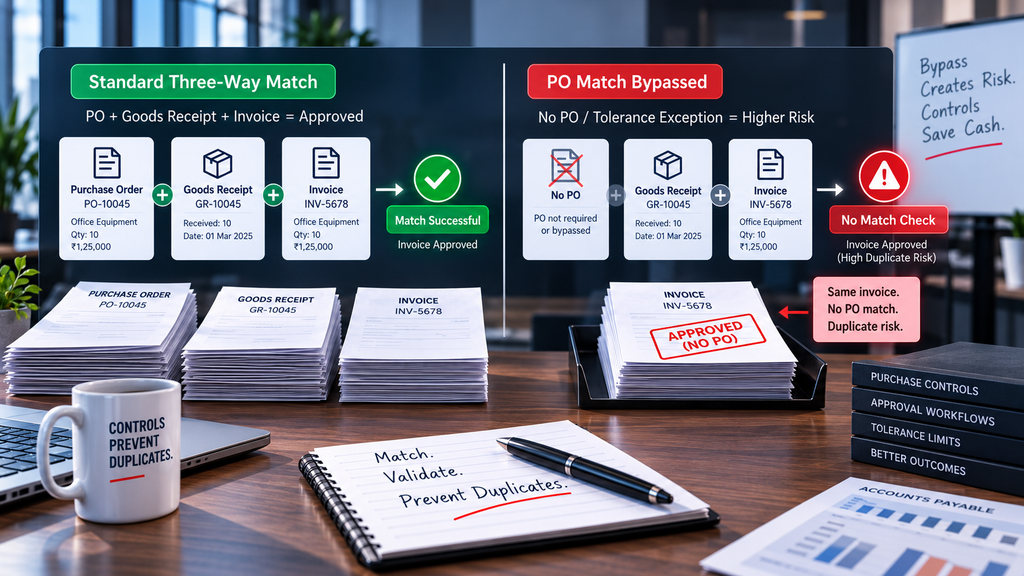
Approval workflows that bypass purchase order matching remove a duplicate detection layer. An invoice marked “no PO” or approved through a tolerance exception skips the line-item reconciliation that would flag if the same goods receipt already has an invoice attached.
Small-value invoice streams often carry reduced validation. If your process automatically approves invoices under a threshold without full matching, you create a duplicate-friendly environment for recurring low-value charges — monthly software subscriptions, utility bills, service contracts.
Automated Payment Programme Configuration
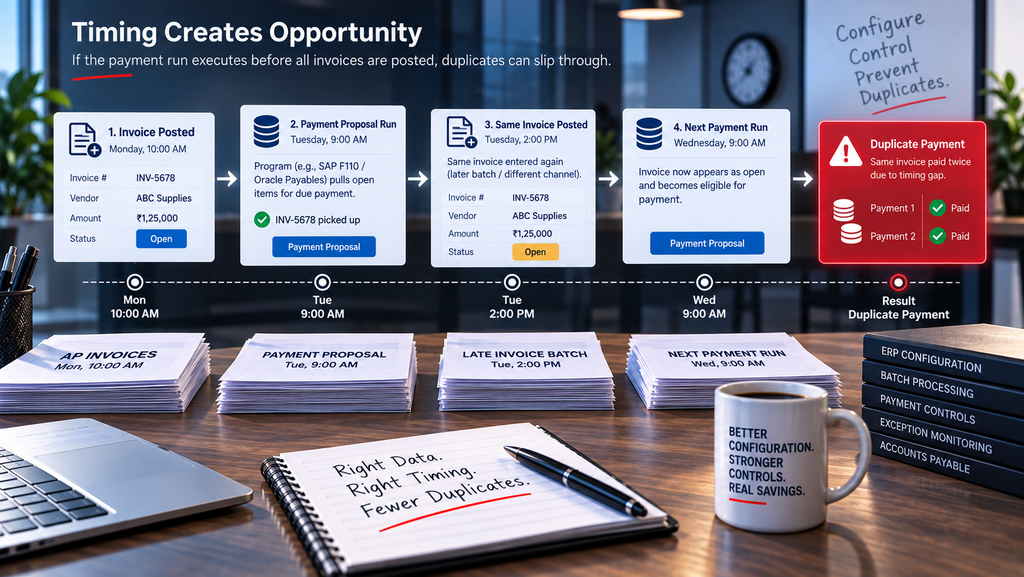
Payment proposal programmes in SAP (F110) and Oracle Payables pull open items based on due date and vendor terms. If the programme runs before all invoice batches for the day have posted, it misses potential duplicates still in workflow. The same invoice, entered later that day, becomes eligible for the next payment run.
Tolerance settings within payment programmes affect duplicate risk. Wide matching tolerances permit payment of invoices with minor discrepancies in amount or date. This flexibility helps operational flow but reduces the friction that would otherwise flag potential duplicates for review.
Detection Through Exception Analysis
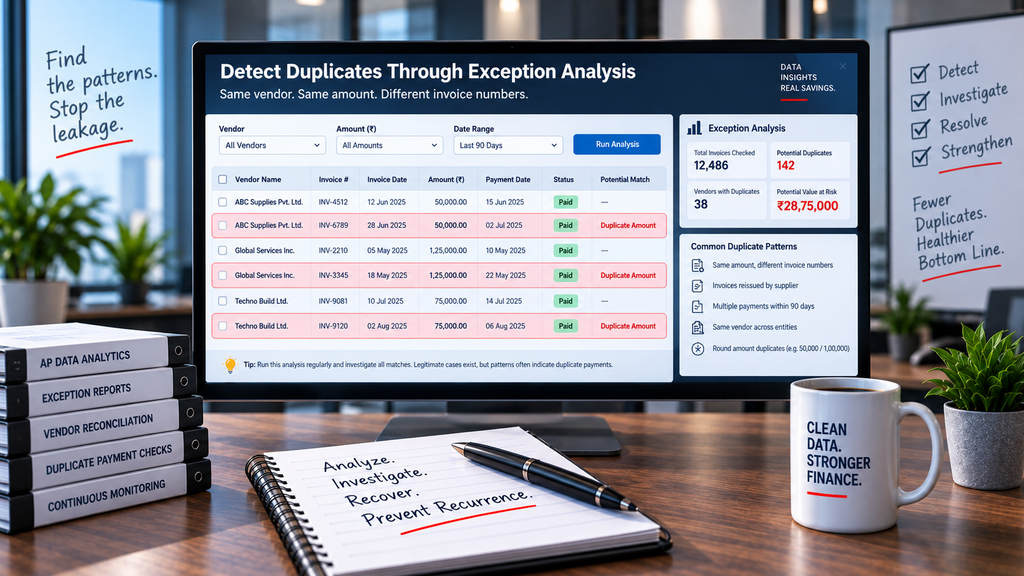
Duplicate payments create identifiable patterns. Run queries for identical invoice amounts to the same vendor within rolling 90-day windows. Filter for matching amounts with different invoice numbers — suppliers sometimes reissue invoices under new numbers when they believe the first wasn’t paid.
Focus on vendors paid multiple times in a single week. Look for payments made across different company codes or legal entities to the same bank account. These patterns surface systematic duplicate causes rather than one-off data entry errors.
Recovery of duplicate payments created by ERP workflow timing, data structure or validation gaps is straightforward once identified. Most suppliers willingly issue refunds or apply credits when presented with evidence of duplicate payment. The challenge is systematic detection in transaction volumes where manual review isn’t practical. That’s where specialized recovery services operating on contingency provide value — they find and recover the duplicates, you retain everything above their fee.
Frequently asked questions
What causes duplicate payments in ERP systems like SAP and Oracle?
Workflow timing gaps between invoice entry and payment runs allow the same invoice to enter twice. Multi-entity structures create duplicates when subsidiaries share vendor master records but maintain separate payables modules. Data migration and system integration events introduce batch overlaps that bypass normal duplicate-detection logic built for real-time entry.
Why don’t ERP duplicate-checking features catch all duplicate payments?
Standard duplicate checks compare invoice numbers within a single vendor code and company code. They fail when the same economic invoice appears under variant vendor numbers, across legal entities, or through different entry channels like EDI and manual AP. Timing windows between entry and posting also allow duplicates to clear validation in parallel.
How do multi-entity company structures increase duplicate payment risk?
When subsidiaries operate separate ERP instances or company codes with independent vendor masters, the same supplier invoice can legitimately exist in multiple systems. Without cross-entity reconciliation, both entities may pay the full amount. Shared service centres consolidating payment runs inherit this risk when vendor master harmonisation lags behind centralisation.
Can data migrations and system upgrades cause duplicate payments?
Yes. Migration cutover periods create payment obligation ambiguity when open items transfer between systems. If the legacy system paid an invoice during cutover and the new system also imported it as unpaid, duplicate payment occurs. System upgrades that alter workflow sequences can also reintroduce previously processed invoices into payment proposal logic.
What workflow features in SAP and Oracle most commonly allow duplicates?
Three-way match bypass approvals permit payment without full purchase order reconciliation, removing a duplicate detection layer. Automatic payment programmes running before all invoice batches post can pay the same obligation twice from different entry sources. Tolerance group settings that allow small-value invoices to skip line-item matching reduce validation depth.
How often should finance teams run duplicate payment reviews?
Quarterly reviews catch systematic issues before they compound. After any system change, data migration, vendor master cleanup or payment process redesign, run an immediate targeted review. Companies with high transaction volumes or recent M&A activity benefit from continuous monitoring using exception reports rather than periodic reviews.