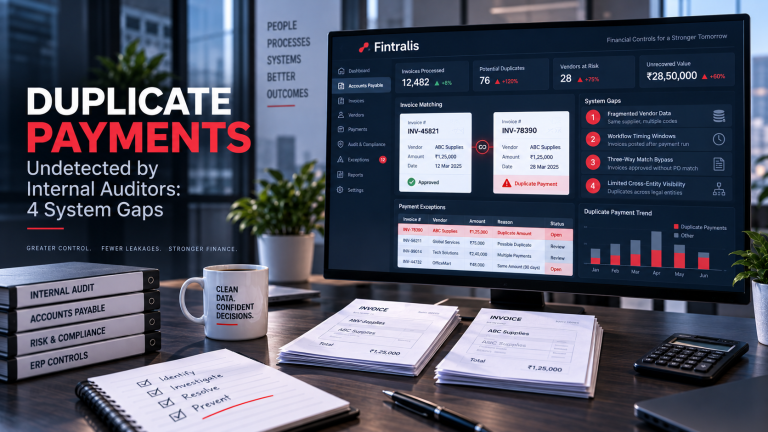
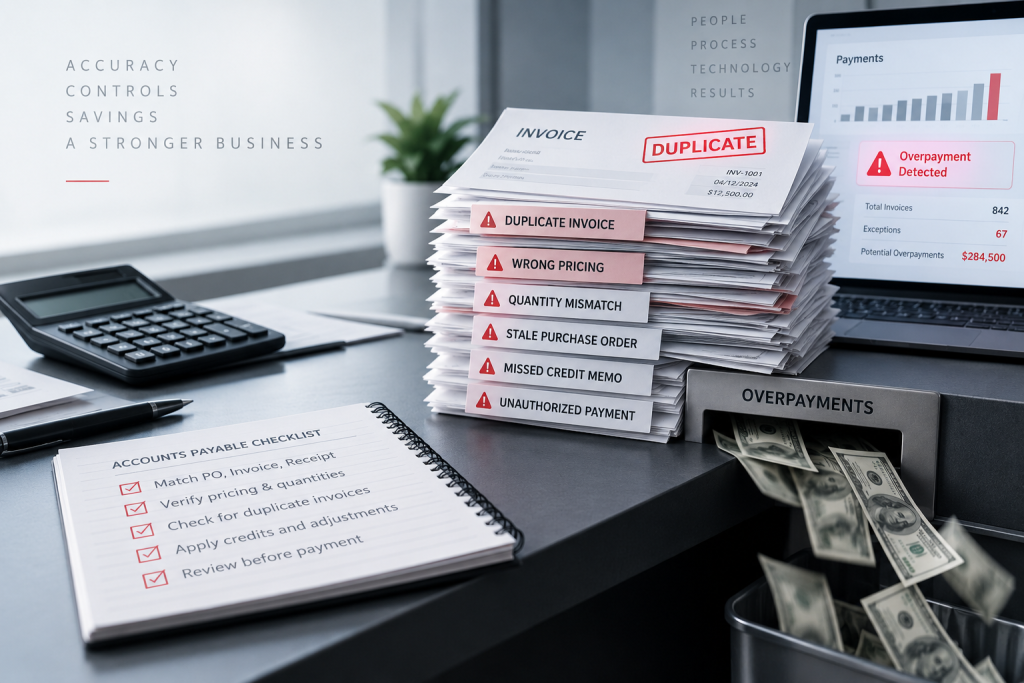
Every accounts payable department processes thousands of transactions. In that volume, errors accumulate. Some mistakes are one-off data entry problems. Others are systematic — the same process flaw repeating across hundreds of invoices. Both types cost money. The systematic ones cost more.
Here are the AP mistakes that most commonly trigger overpayments, and the operational gaps that let them through.
Duplicate Invoices
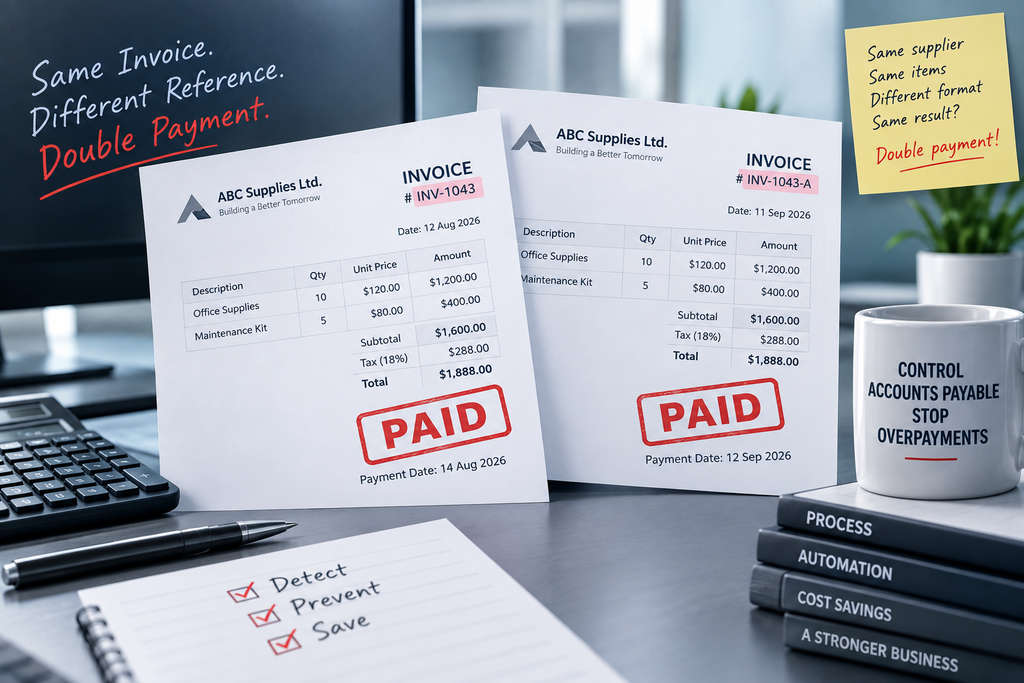
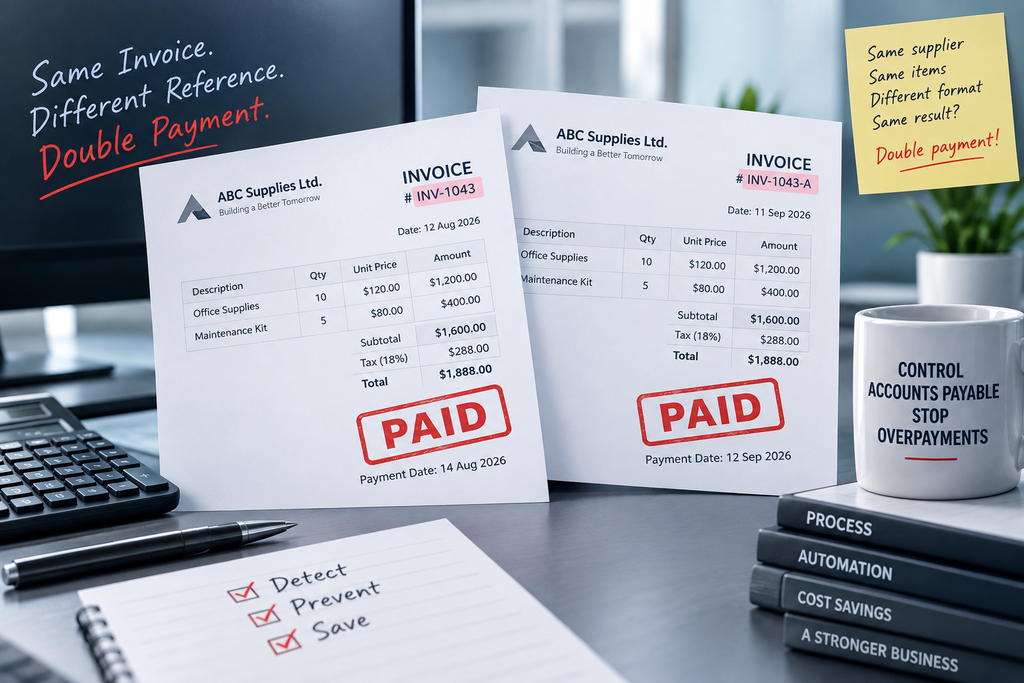
A supplier submits the same invoice twice. The second version arrives with a slightly different reference number, or as a PDF instead of paper, or thirty days later. Without automated duplicate detection, both invoices get processed. Both get paid.
This happens more often when multiple people in AP handle the same supplier, when invoice formats change mid-year, or when a supplier switches billing systems. The underlying problem is usually inadequate three-way matching between purchase order, receipt and invoice — or no matching at all for non-PO invoices.
Pricing Errors Against Contract Terms
Your procurement team negotiates a discount or volume rebate. The supplier agrees. But their billing system applies the old rate. AP processes the invoice at face value without cross-checking the contract.
This error is systematic when contract terms live in one system and invoice processing happens in another, with no automated rate validation. It gets worse when contract data is stored in spreadsheets or shared drives rather than integrated into the ERP.
Stale or Expired Purchase Orders
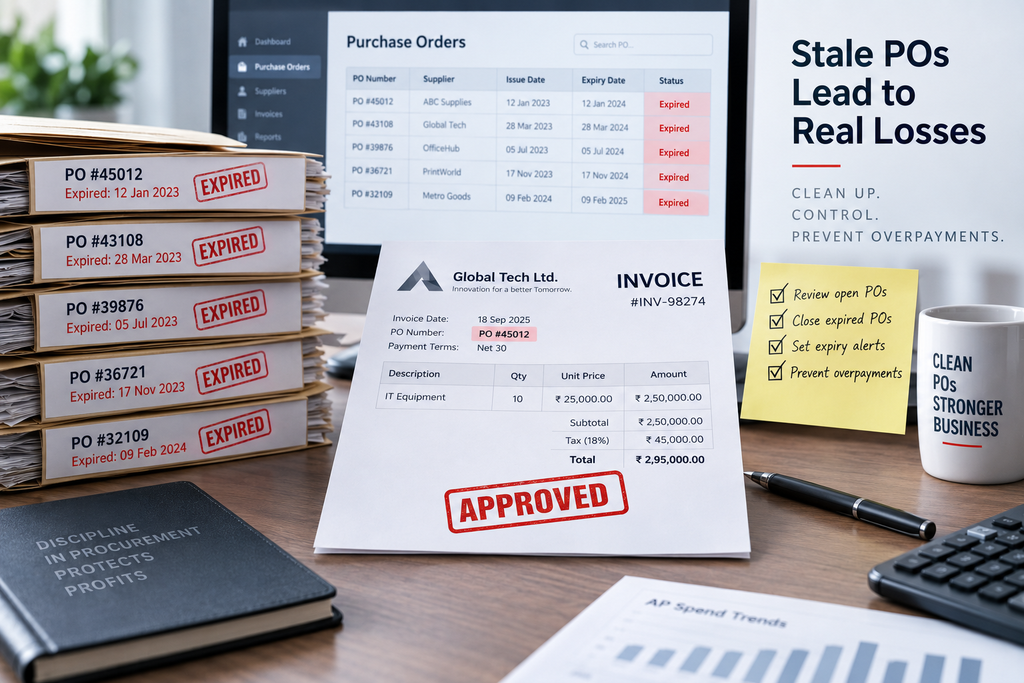
A purchase order remains open in the system past its expiry date. A supplier invoices against that PO months or years later — sometimes at outdated pricing — and AP approves it because the PO number matches.
The fix is a regular PO cleanup process. Many organisations lack one. Old POs accumulate, and the system treats them as valid indefinitely. When suppliers reference them, payment follows.
Related: Early Payment Discounts
A supplier offers a two percent discount for payment within ten days. AP processes the invoice on day twelve. The discount is lost, but the payment goes out at the full amount. Over hundreds of invoices, that’s real money.
The error here is workflow timing, not fraud or incompetence. If invoices sit in an approval queue for a week, the discount window closes before anyone can act. The solution is faster routing and a system that flags discount-eligible invoices at intake.
Untracked Credit Memos
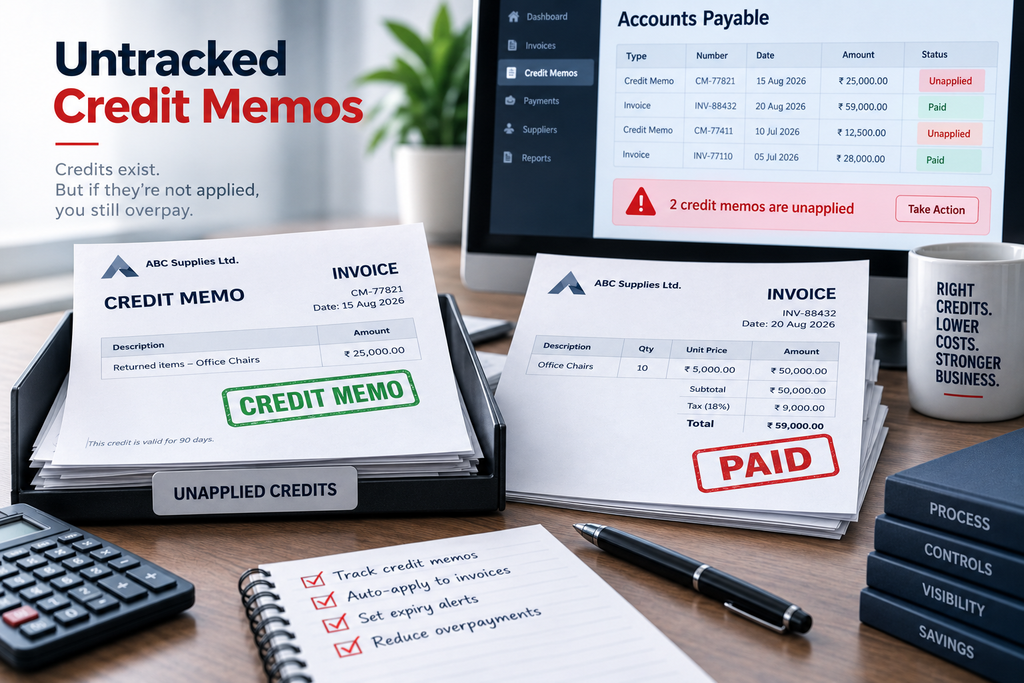
A supplier issues a credit memo for a returned item, a billing correction, or a service failure. That credit should offset the next invoice. Instead, it sits unapplied in the system. The next invoice is paid in full. The credit expires or gets forgotten.
This happens when credit memos are recorded manually, or when the AP system doesn’t automatically apply credits to open invoices. It also happens when credits are issued to one entity or cost centre and invoices are paid by another, with no cross-entity reconciliation.
Retroactive Price Changes
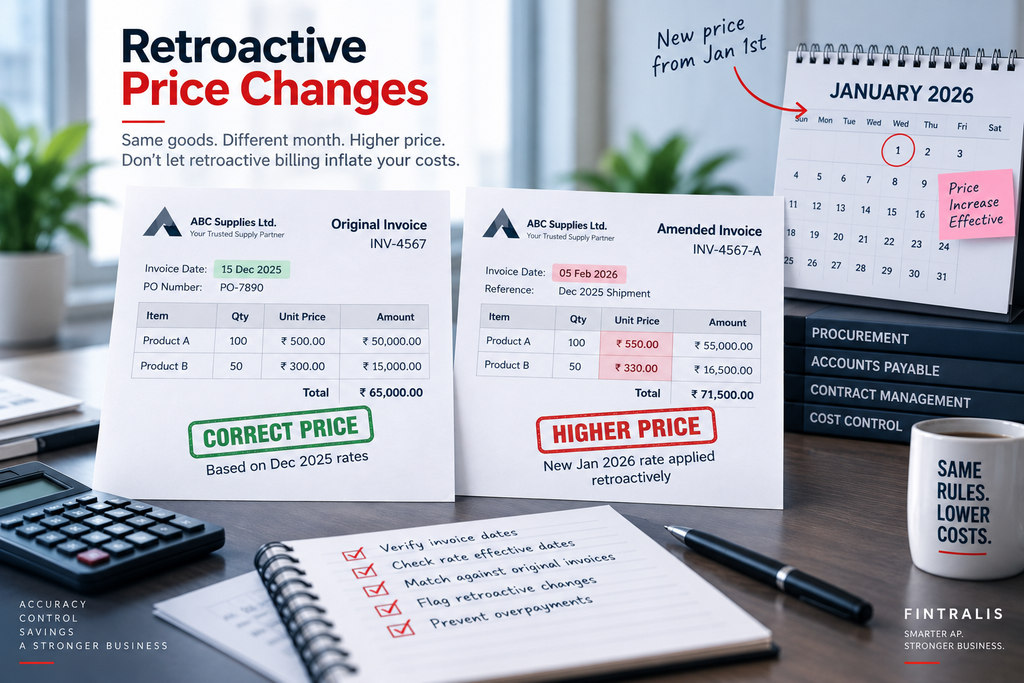
A supplier increases prices on January 1st. In February, they send an amended invoice for December shipments, applying the new rate retroactively. If AP doesn’t check the original invoice date against the rate effective date, the higher price gets paid — even though the old rate was correct at the time.
The underlying problem is poor version control and insufficient audit trails. AP teams need to see when an invoice was first received, what was paid, and whether any subsequent submission is a correction or a duplicate with inflated amounts.
Freight and Handling Errors
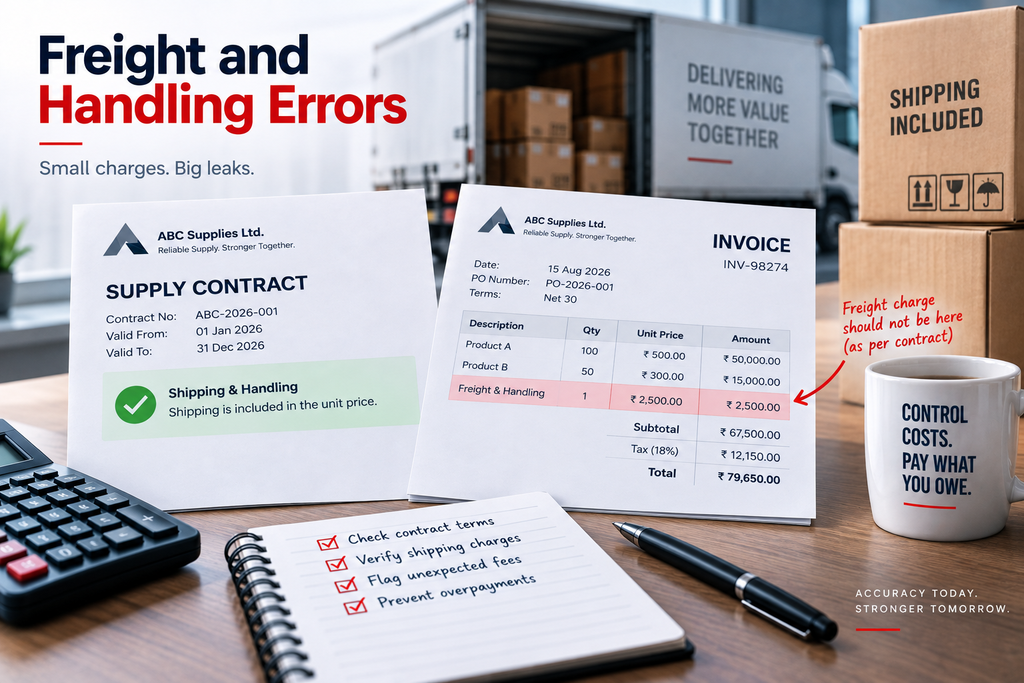
A contract specifies that shipping is included, or capped at a certain amount. The invoice includes a separate freight charge anyway. AP pays it because the line item is present and the total seems reasonable.
This error is less about systems and more about visibility. AP staff often don’t have easy access to the freight terms buried in a procurement contract. They process what they see. The overcharge goes unnoticed until someone runs a spend analysis months later — if at all.
Quantity and Unit-of-Measure Mismatches
A purchase order is written in cases. The invoice is billed in individual units. The conversion gets applied incorrectly, and AP pays for ten times the quantity actually received. Or the supplier rounds up fractional quantities, and AP doesn’t catch it.
This is a three-way matching failure. If AP is matching only on dollar totals and not on quantity and unit price, these errors slip through. The problem compounds when receiving data is incomplete or entered incorrectly at the warehouse level.
What To Do About It
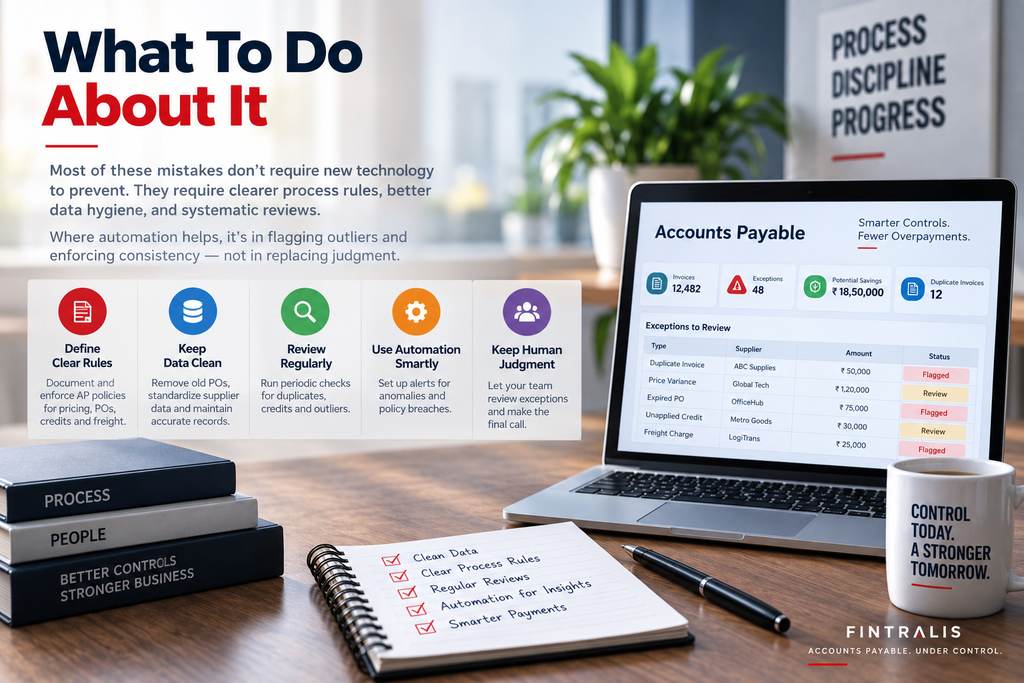
Most of these mistakes don’t require new technology to prevent. They require clearer process rules, better data hygiene, and systematic reviews. Where automation helps, it’s in flagging outliers and enforcing consistency — not in replacing judgment.
For errors that have already happened, a transaction-level recovery audit across the last three to five years will surface the overpayments. That’s what Fintralis does: we work with your AP data in SAP, Oracle or JD Edwards to identify and recover those amounts, on a fully contingency basis. No recovery, no fee. If you’d like to know what’s sitting unclaimed in your transaction history, we can tell you.
Frequently asked questions
What is the most common accounts payable mistake that causes overpayments?
Duplicate invoicing is the most frequent cause. Suppliers submit the same invoice twice — often with slight variations in format or reference number — and both get processed and paid. This happens when AP teams lack automated duplicate-detection controls and rely on manual matching.
How do expired purchase orders lead to overpayment?
When purchase orders remain open past their valid dates, suppliers sometimes invoice against stale pricing or terms that no longer apply. If AP processes these invoices without verifying current contract rates, the company pays outdated — often higher — prices instead of renegotiated terms.
Why do price increases sometimes get applied retroactively by mistake?
Suppliers occasionally backdate new pricing to invoices already paid at old rates, then resubmit corrected invoices. If AP pays the new invoice without checking payment history, the company pays twice. Proper three-way matching and invoice audit trails prevent this error.
What role do untracked credits play in AP overpayments?
Suppliers issue credit memos for returns, pricing adjustments, or service failures. When AP systems don’t automatically offset these credits against future invoices, companies pay full price on subsequent bills despite being owed money. The credits sit unused while cash flows out.
How often should companies review their accounts payable for errors?
Most finance teams conduct quarterly spot checks, but many overpayments go undetected for years. Systematic recovery audits that scan three to five years of transaction history typically uncover more issues than ongoing reviews alone, because they apply consistent detection logic across the entire dataset.