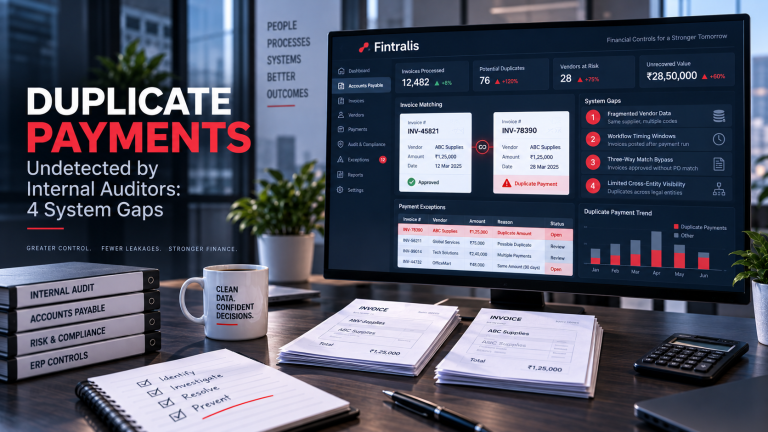

Your AP team runs three-way matching on every invoice over the threshold. Purchase order, goods receipt, invoice. The system flags mismatches. Someone investigates. You pay when all three align.
This process catches data entry errors and obvious fraud. It does not catch the errors that cost you the most money.
What Three-Way Matching Actually Does
The three-way match process compares three documents before releasing payment:
- The purchase order shows what you agreed to buy, at what price, in what quantity
- The goods receipt or service confirmation shows what you actually received
- The supplier invoice shows what the supplier is billing
When these three documents align on price, quantity, and terms, the system approves payment. When they don’t align, the invoice goes to a queue for manual review.
This catches wrong quantities, incorrect unit prices, and invoices with no corresponding PO. These are real errors and worth catching.
But three-way matching is a point-in-time validation. It confirms that this specific transaction is internally consistent. It does not look backward at payment history. It does not compare to contract terms. It does not check whether you’ve already paid this invoice under a different number.
The Errors That Slip Through
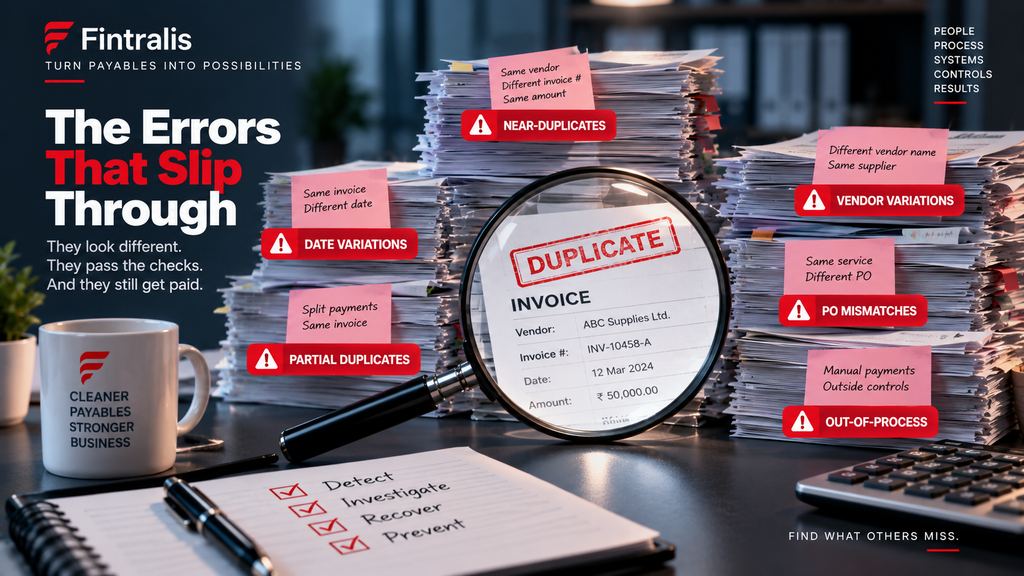
Duplicate Payments With Different Invoice Numbers
Your supplier submits invoice 4521 for March consulting services. You run three-way match. Everything aligns. You pay.
Two months later, the same supplier submits invoice 4890 for “Q1 professional services.” It’s the same work, same amount, different description. Three-way matching sees a valid PO, a service confirmation, and an invoice. All three match. You pay again.
The three-way match process validated each transaction independently. It did not compare across transactions to identify the duplication.
Contract Price Drift
You negotiated a master service agreement with a supplier three years ago. Your contract specifies prices for various service levels. Over time, the supplier’s pricing creeps up. The increases are small enough that nobody catches them, but the invoiced rates no longer match the contract.
Your three-way match compares the invoice to the purchase order. If procurement created the PO with the wrong pricing, the match succeeds. The system has no mechanism to compare PO pricing back to the master agreement.
Freight and Handling Charges
Your contract specifies that the supplier covers freight for orders above a certain threshold. The supplier adds freight charges anyway. Your three-way match sees a line item on the PO, a corresponding charge on the invoice, and approves payment.
Nobody checked whether that freight charge should exist in the first place.
Early Payment Discounts Not Taken
Your supplier offers 2% discount for payment within ten days. Your AP team processes the invoice on day fourteen and pays full price. The three-way match confirmed that the full price matches the invoice and PO. It did not flag that you missed a discount you were entitled to take.
Payments Outside the PO System
Some invoices get processed without a purchase order. Maybe it’s an emergency repair. Maybe it’s a low-value item under your PO threshold. Maybe someone in the field approved work and your AP team is processing the invoice after the fact.
These payments bypass three-way matching entirely. There is no PO to match against.
Why This Happens
Three-way matching was designed to prevent a specific type of fraud: paying for goods or services you never ordered or received. It does that job well.
It was not designed to enforce contract compliance, identify duplicates across different invoice numbers, or flag systematic overcharges that develop over time. Those problems require different tools.
The issue is that many finance teams treat three-way matching as comprehensive validation. If the system approves it, the payment must be correct. That assumption creates blind spots.
What Works Better
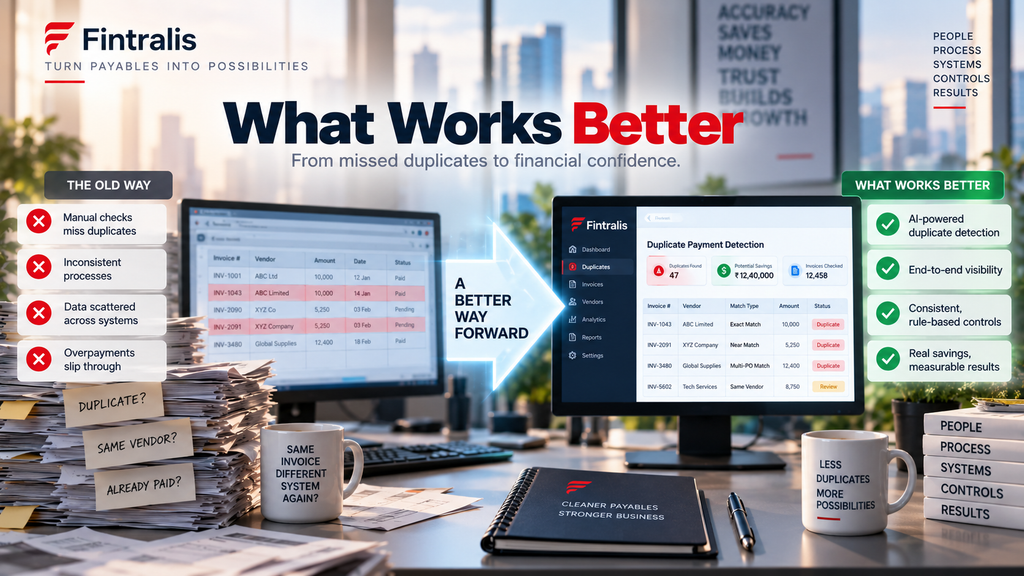
You need pre-payment validation and post-payment forensics. Three-way matching is your pre-payment control. It catches obvious errors before money leaves your account.
Post-payment forensics look backward across your entire payment history to find patterns:
- Multiple payments to the same supplier for overlapping time periods or duplicate services
- Gradual price increases on recurring purchases that don’t match contract terms
- Freight charges on orders that should ship free
- Payments processed after discount periods expired when earlier processing was possible
- Invoices paid twice under different invoice numbers or cost centers
This analysis requires transaction data across multiple years and comparison to contract terms. It is forensic accounting work, not real-time validation.
The practical problem is that your AP team is processing current invoices. They do not have time to review three years of historical payments looking for duplicates and contract violations.
Recovery Without Internal Resources
Forensic AP audits find money you’ve already paid and should not have. The work is technical and time-intensive. The value is in recovered funds, not ongoing process improvement.
Contingency-based recovery services perform this analysis at no upfront cost. They analyze your payment data, identify overpayments and duplicates, and recover funds from suppliers. They charge only on successful recovery.
This approach works for companies with substantial AP spend because the volume of transactions makes recovery economically viable. If you are processing tens of thousands of invoices annually, the statistical likelihood of duplicate payments, missed discounts, and contract violations is high enough to justify the forensic work.
Your three-way match process remains in place. It continues to catch obvious errors before payment. The forensic work runs separately on historical data to find the errors that point-in-time validation cannot detect.
Frequently asked questions
What is a three-way match in accounts payable?
A three-way match compares three documents before payment: the purchase order from procurement, the goods receipt from receiving, and the supplier invoice. Payment is released only when quantities, prices, and terms align across all three. The process catches obvious mismatches like wrong quantities or pricing errors.
Why do three-way matches miss duplicate payments?
Three-way matching validates that each individual transaction is legitimate but doesn’t compare across historical payments. A supplier can submit the same invoice twice with different invoice numbers, or bill for the same work under different project codes. Each transaction passes the three-way check independently while you pay twice.
What types of AP errors does three-way matching not catch?
Three-way matching misses contract compliance failures, early payment discounts you earned but didn’t take, incorrect tax calculations, freight charges that violate agreements, and payments made outside the PO system. It validates internal consistency but not external obligations or historical payment patterns.
How do companies find AP errors that three-way matching misses?
Post-payment forensic audits use transaction pattern analysis to identify duplicates across invoice numbers, contract compliance reviews to catch pricing drift, and historical benchmarking to spot gradual overcharges. Specialized recovery services work on contingency to find these errors without adding to AP workload.
Should we eliminate three-way matching in accounts payable?
No. Three-way matching remains essential for catching data entry errors and obvious fraud before payment. The issue is treating it as complete validation when it only covers one category of error. Companies need both pre-payment controls and post-payment forensic reviews to capture the full range of leakage.
What percentage of AP errors does three-way matching catch?
Three-way matching catches document mismatches and data entry errors, which represent obvious discrepancies. However, it’s designed to validate transaction legitimacy, not identify overpayments, contract drift, duplicate payments with different invoice numbers, or systematic overcharges that develop gradually. These categories require different detection methods.