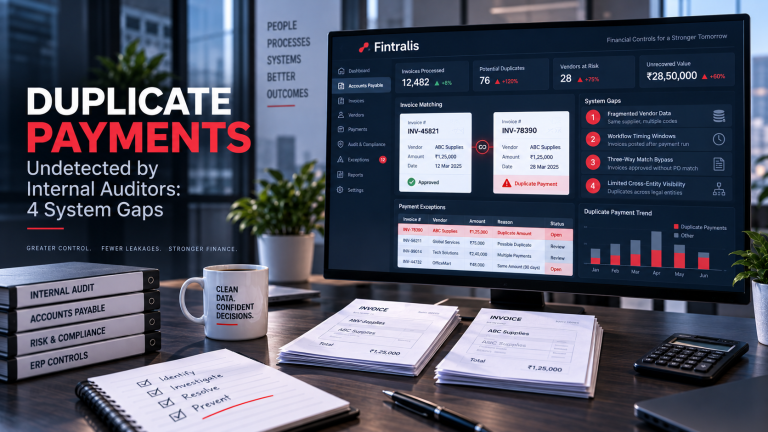

Finance teams know overpayments happen. What they underestimate is how much faster they accumulate when a company grows, migrates systems, restructures, or enters new markets. The combination of rising transaction volumes and diminished oversight turns small process gaps into material leakage.
Growth Multiplies Vendor Complexity

As headcount and revenue climb, invoice volumes rise faster than finance capacity. New suppliers enter the vendor master without complete vetting. Contract terms change mid-year. Pricing schedules live in email threads instead of the ERP. Your AP clerks process more invoices per day with less time to cross-check each one against purchase orders, prior payments, or updated agreements.
Duplicate invoices become easier to miss. A supplier sends a corrected invoice with a new number; both get paid. A service contract renews at a higher rate, but the old rate stays in the system for another quarter. A volume rebate applies retrospectively, but no one adjusts the accrual. Each mistake is small, but the denominator is large.
System Migrations Create Overlap and Gaps
When you migrate from one ERP platform to another—or consolidate instances after an acquisition—vendor records, payment histories, and contract data move imperfectly. Invoice numbers reset. Vendor identifiers change. Payment terms default to generic templates. For a period of weeks or months, both old and new systems run in parallel, and the same invoice can appear in both.
During this window, AP teams rely on manual tracking and spreadsheet reconciliation. They are under pressure to keep payments flowing, so they err on the side of processing rather than blocking. Duplicate payments slip through. Price and tax configurations migrate incorrectly. The errors stay hidden until someone runs a post-migration audit—if that audit happens at all.
Restructures and M&A Blur Ownership
Restructuring scatters accountability. Legal entities merge or split. Vendor relationships transfer from one subsidiary to another. Contracts sit in limbo while commercial teams renegotiate scope and pricing. In the interim, invoices keep arriving, often addressed to the old entity or sent to multiple locations.
AP clerks at both entities may pay the same invoice, each assuming the other is not responsible. Vendor master records duplicate across the new structure. Pricing schedules reflect outdated terms because no one has confirmed which contract governs the consolidated entity. Finance inherits the cleanup long after the integration is declared complete.
New Markets Add Jurisdictional Friction

Expanding into new geographies introduces foreign currencies, tax rules, payment customs, and local vendor practices your team does not yet understand. Invoices arrive in unfamiliar formats. Tax calculations require manual verification. Currency conversion errors go unnoticed because the amounts look plausible in the base currency.
Local suppliers test your processes. They resend invoices that were already paid, knowing your offshore AP team lacks the context to recognize the duplicate. Pricing disputes take longer to resolve across time zones and languages. Contract terms default to templates that do not reflect negotiated discounts. The cost of learning is often measured in overpayments.
Why Standard Controls Fall Short
Three-way matching works when purchase orders, receipts, and invoices align cleanly. It fails when services are billed monthly, pricing changes mid-contract, or POs cover multiple delivery schedules. Approval workflows catch missing sign-offs but not incorrect amounts. Vendor statements reconcile to your records only if your records are correct in the first place.
AP automation tools reduce clerical errors and speed up routing. They do not prevent overpayments caused by bad master data, contract amendments that never reach the ERP, or duplicate vendor records created during a migration. These errors require someone to compare payment history against contract terms, identify patterns across thousands of transactions, and quantify what should have been paid versus what was paid.
When to Look for Hidden Leakage
If your company has grown revenue by more than twenty-five percent in the past two years, migrated ERP systems, completed an acquisition, or expanded into new markets, the probability of material overpayments is high. The combination of volume, complexity, and team strain creates the conditions where errors compound.
Most finance teams lack the bandwidth to conduct a thorough AP recovery review while managing daily close, reporting, and operations. A contingency-based recovery service works inside your SAP, Oracle, or JD Edwards transaction data to identify duplicate payments, pricing errors, and contract mismatches without requiring your team to stop what they are doing. You pay only on amounts successfully recovered, so there is no upfront cost and no distraction from your priorities.
If you suspect overpayments but cannot dedicate staff to investigate, Fintralis offers a diagnostic review at no cost. We work on contingency, so you pay only when we recover funds your team did not have time to find.
Frequently asked questions
Why do overpayments increase during company growth?
Growth brings higher invoice volumes, new vendors, changing contract terms, and staff onboarding—all at once. These shifts multiply the ways duplicate invoices, pricing mismatches, and contract discrepancies slip through, while your team has less time per transaction to spot them.
What types of overpayments happen most often during system migrations?
Duplicate payments are the most common. Old and new systems briefly overlap, vendor records transfer incompletely, invoice numbering conventions change, and a single bill gets keyed twice. Rate tables and payment terms often fail to migrate correctly, creating price mismatches no one notices until much later.
How do restructures and M&A create accounts payable overpayments?
Restructures scatter vendor relationships across legal entities and create ambiguity over who owes what. Contracts sit in limbo, approvers change, and duplicate vendor master records appear. The same supplier invoice can arrive at two subsidiaries, both pay it, and neither realizes until after the fact.
Does expanding into new markets make AP leakage worse?
Yes. New markets mean unfamiliar currencies, tax rules, payment customs, and local vendor terms. Your team has less pattern recognition, compliance checks take longer, and vendors test your processes. Pricing errors and duplicate vendor setups become harder to spot across jurisdictions.
What should finance leaders do if they suspect overpayments but lack bandwidth to investigate?
Consider a contingency-based AP recovery service that works inside your ERP data to identify overpayments without pulling your team off daily work. You pay only on recovered amounts, so there is no upfront cost or distraction. Prioritize vendors with the highest spend or recent contract changes first.
Can AP automation prevent overpayments during rapid growth?
Automation helps with matching and routing, but it cannot catch everything. Contract terms still change manually, pricing schedules live in spreadsheets, and vendors still send amended invoices that look new. Automation reduces clerical duplication but does not eliminate judgement errors or poorly maintained master data.