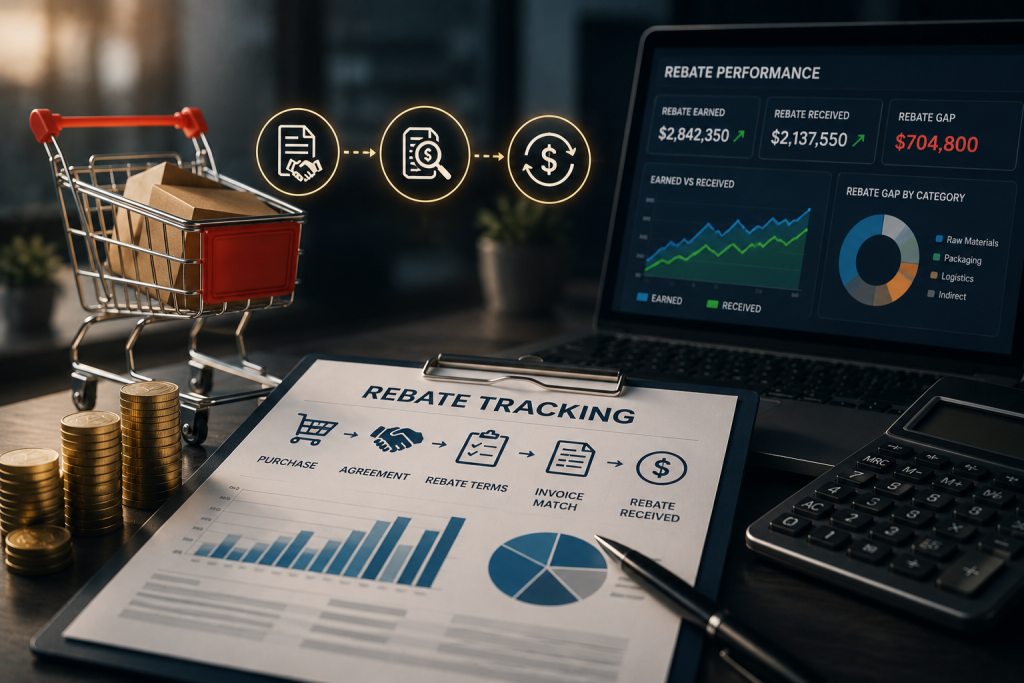
Procurement rebate tracking is the process of identifying, calculating, and recovering volume discounts, retrospective credits, and performance-based rebates that suppliers owe under contract. Unlike fraud or duplicate payments, rebate leakage is not caused by a process failure. It happens because the company earned a discount the supplier did not apply, and no one noticed.
What procurement rebates are and why they disappear
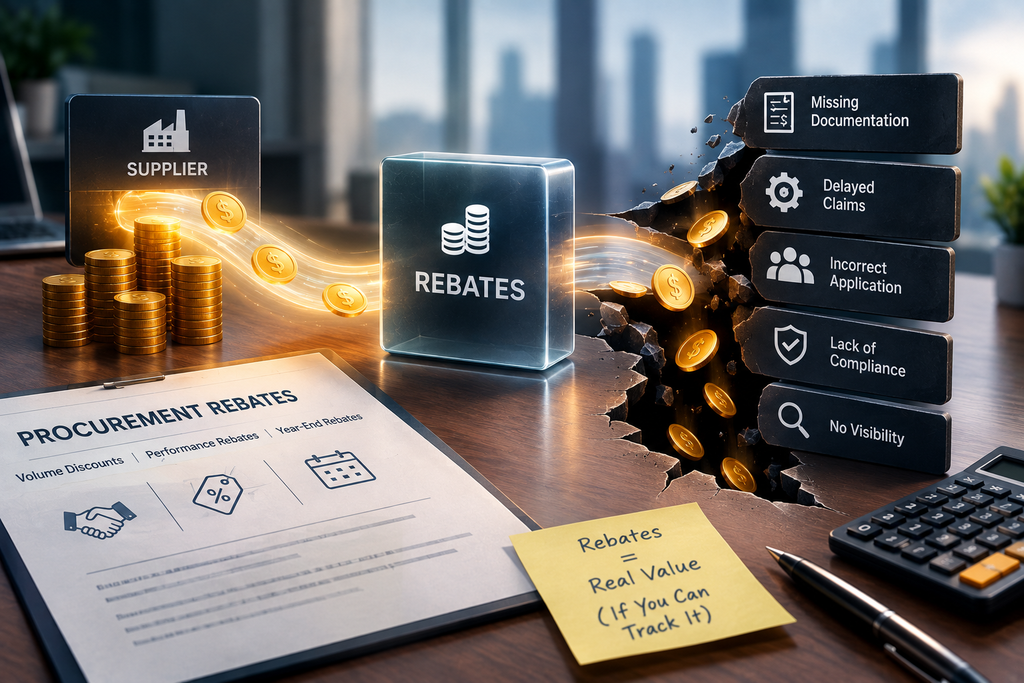
A rebate is a retrospective discount. The supplier agrees to reduce the price if the buyer hits a volume threshold, meets a payment deadline, or consolidates spend within a calendar period. The discount may apply quarterly, annually, or when cumulative spend crosses a tier. It does not appear on individual invoices. The supplier calculates it later and issues a credit note or adjusts future invoices.
Rebates disappear for four reasons. First, the supplier’s system does not track the buyer’s volume correctly, especially when orders cross business units or ERP instances. Second, the contract specifies a tier structure the supplier applies incorrectly. Third, the rebate period resets on a calendar boundary the buyer’s system does not flag. Fourth, the supplier delays or omits the credit, and no one at the buyer reconciles what was earned against what was received.
None of this is fraud. The supplier is not writing fake invoices. The buyer is not paying duplicates. The AP team is not bypassing controls. The rebate was earned, the contract is enforceable, and the money is recoverable. It is simply invisible in the normal invoice stream.
How rebate tracking works in practice
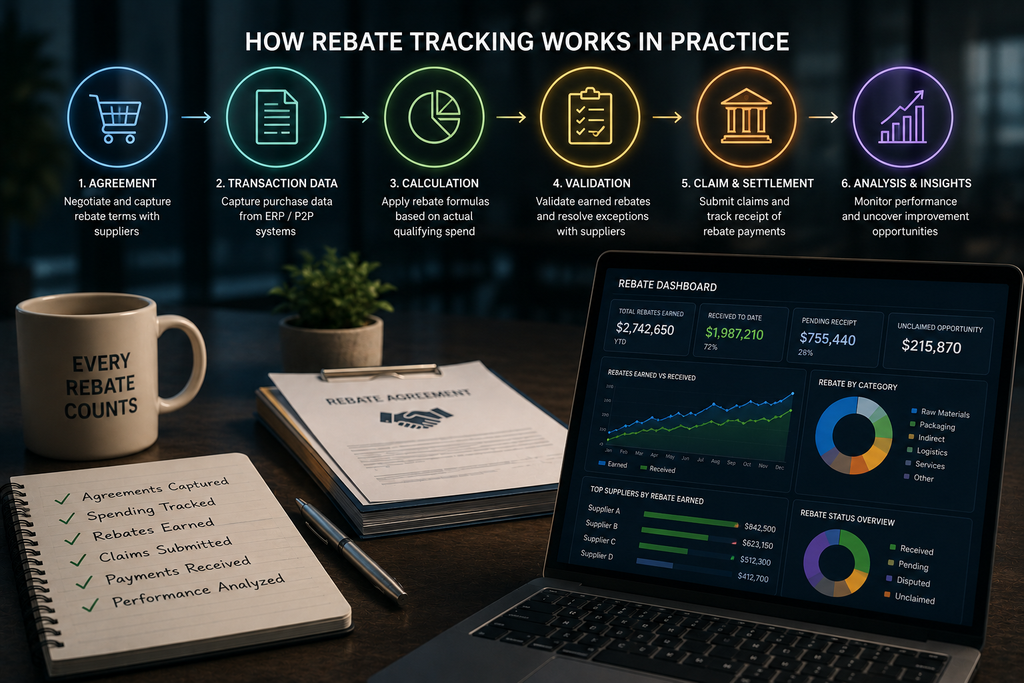
Effective rebate tracking starts with a complete list of contracts that include volume, timing, or performance clauses. The next step is to extract every invoice paid to those suppliers during the rebate period. The third step is to rebuild the supplier’s rebate calculation using the contract terms. The final step is to compare the calculated rebate to the credits the supplier actually applied.
This is straightforward for a single supplier with one product line and one rebate tier. It becomes complex when the contract spans multiple legal entities, the rebate period does not align with the fiscal year, or the supplier uses a tiered schedule that changes mid-year. The ERP holds all the necessary data, but no standard report consolidates it in a way that flags shortfalls.
SAP, Oracle, and JD Edwards all record contract terms, purchase orders, and invoice payments. None of them automatically reconciles multi-month volume thresholds against supplier-issued credits. Finance teams can build custom reports, but most lack the internal capacity to do this at scale across dozens of suppliers.
Why rebate leakage exceeds fraud losses in mature AP functions
Companies with strong AP controls catch duplicate payments, fraudulent invoices, and pricing errors. They have segregation of duties, three-way matching, and exception workflows. These controls prevent intentional and accidental overpayment. They do not capture underpayment of rebates, because the rebate never appears as a discrete transaction the system can match.
The CFO sees fraud losses as a percentage of AP spend. Internal audit measures control effectiveness by exception rates. Neither metric surfaces rebate leakage, because the company did not overpay an invoice. It undercollected a contractual credit. The exposure grows with the number of tiered rebate agreements, not with the number of invoices.
Organizations that have eliminated fraud and duplicate payments through automation often find that systematic rebate tracking recovers more cash than their fraud-prevention program ever saved. The reason is volume: every supplier with a tiered rebate clause is a potential recovery, and the shortfall compounds over years if no one reconciles.
What CFOs should look for in a rebate tracking process

An effective rebate tracking process requires three elements. First, a complete contract inventory that flags every volume, performance, or time-based rebate clause. Second, automated extraction and reconciliation of invoice data against those clauses. Third, a documented recovery process that includes supplier correspondence and audit support.
Most finance teams lack the internal capacity to build and maintain this process at scale. Contingency-based recovery services eliminate the upfront cost and internal workload. The service provider extracts the data, performs the reconciliation, and manages supplier correspondence. The company pays only when a shortfall is confirmed and recovered.
If your AP spend exceeds fifty million dollars and you have negotiated volume rebates with your top suppliers, systematic tracking will identify shortfalls. The question is whether the internal team has the bandwidth to do it, or whether a contingency model makes more sense. Fintralis operates on a no-recovery, no-fee basis and works directly with SAP, Oracle, and JD Edwards data to identify and recover underpaid rebates.
Frequently asked questions
What is procurement rebate tracking?
Procurement rebate tracking is the systematic identification and recovery of volume discounts, retrospective credits, and performance-based rebates negotiated with suppliers. It matches purchase history against contract terms to confirm the supplier applies every earned credit. Without formal tracking, companies routinely forfeit rebates that exceed their fraud losses.
How do companies lose procurement rebates?
Companies lose rebates through incomplete supplier reporting, missed volume thresholds that span multiple purchase orders, incorrect tier calculations, and calendar-year resets that require manual reconciliation. The supplier may apply credits inconsistently or not at all. No single invoice reveals the shortfall because the discount applies across months or systems.
What ERP systems support procurement rebate tracking?
SAP, Oracle and JD Edwards all store the contract and invoice data required for rebate tracking, but none automatically reconciles multi-month volume thresholds or flags missing credits. Finance teams must extract data, rebuild the supplier’s calculation, and compare it to applied credits. Specialized recovery services automate this reconciliation across ERP platforms.
Who is responsible for procurement rebate tracking in a company?
Responsibility typically splits across procurement, accounts payable, and FP&A. Procurement negotiates the rebate. AP processes the invoices. FP&A forecasts the cash benefit. No single owner reconciles earned versus received. This structural gap is why rebates fall through, even when the company has sophisticated controls elsewhere.
How much do companies typically lose to untracked procurement rebates?
The shortfall varies by supplier mix and contract complexity, but systematic tracking routinely identifies five- and six-figure gaps in companies with annual AP spend above fifty million dollars. The loss is proportional to the number of tiered or time-based rebate clauses, not total spend. No average exists because each supplier portfolio is different.
Can procurement rebate tracking be done in-house?
Yes, if the finance team has capacity to extract data from the ERP, rebuild each supplier’s rebate logic, reconcile thresholds that span fiscal years, and challenge suppliers when calculations differ. Most CFOs find this impractical at scale. Contingency-based services eliminate the internal workload and only charge when they recover underpaid rebates.