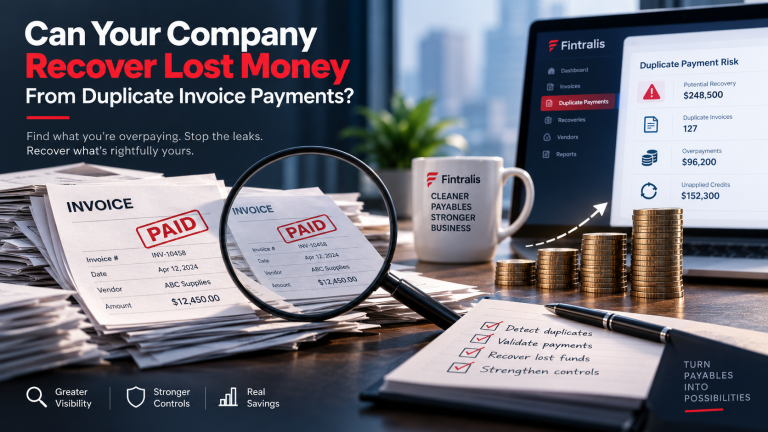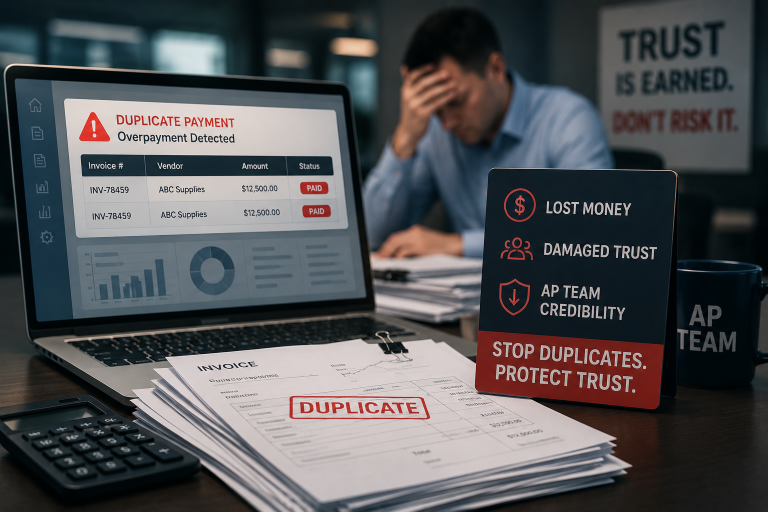
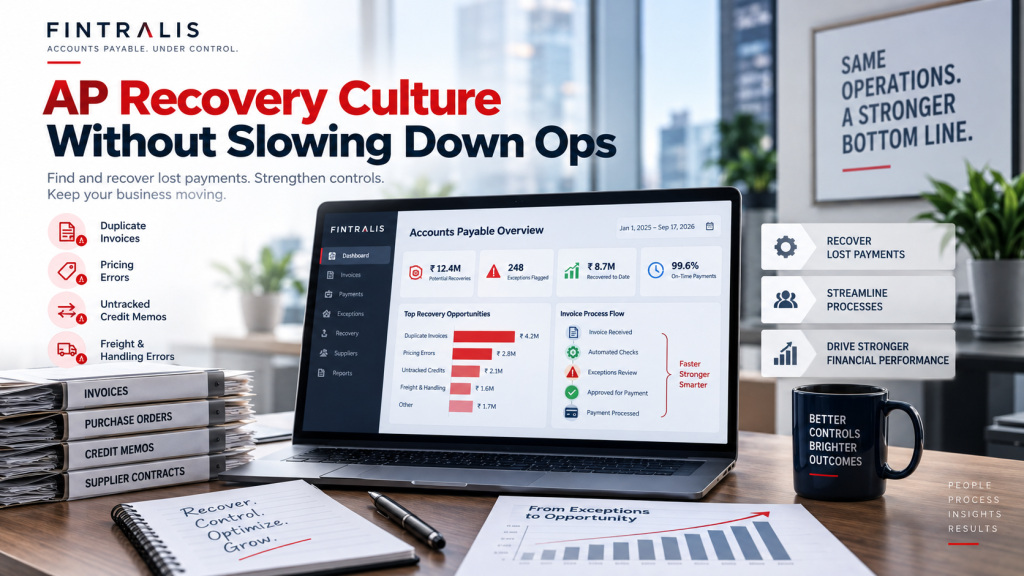
Most accounts payable recovery programmes fail not because the analytics are weak, but because no one tells finance about the errors in the first place.
The person who knows a duplicate payment went through is the AP clerk who processed it, or the procurement analyst who approved the same invoice twice under different PO numbers, or the plant manager who signed off on a services invoice for work that was already covered under contract.
And in most companies, those people have every incentive to stay quiet.
Why Operations Teams Hide Payment Errors
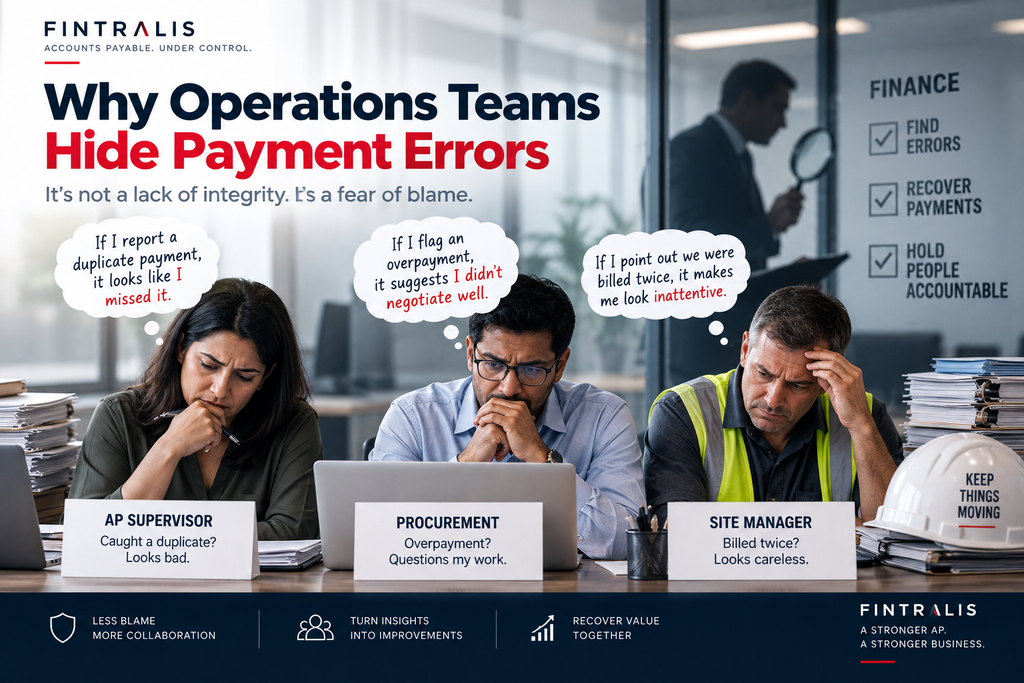
When finance launches a recovery initiative, the unspoken message ops teams hear is: “We’re looking for your mistakes.”
If you’re an AP supervisor, reporting a duplicate payment means admitting you didn’t catch something before it left the building. If you’re in procurement, flagging an overpayment suggests you didn’t negotiate correctly or review the contract terms. If you’re a site manager, pointing out that you were billed twice for the same equipment rental makes you look inattentive.
Even when there’s no formal punishment, the social cost is real. Vendors complain. Controllers ask questions. Audit trails get scrutinised. People remember.
So the safer move is to say nothing, absorb the loss, and make sure the next invoice is correct. No drama. No visibility. No recovery.
Separate Recovery from Fault
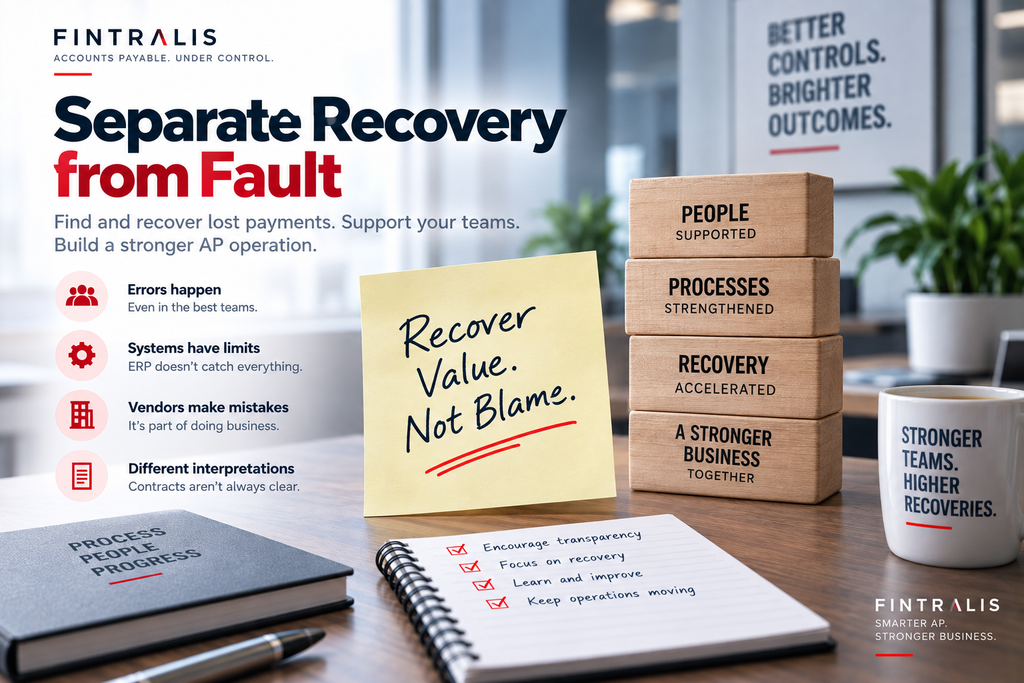
The fastest way to change this dynamic is to make it clear—repeatedly, in writing, and through action—that recovery work is not performance review work.
Errors happen in every AP operation, especially at scale. A company processing 50,000 invoices a year will have duplicates, misapplied credits, pricing mismatches, and unearned early-payment discounts no matter how good the team is. ERP systems don’t catch everything. Vendors make mistakes. Contracts get interpreted differently by different people.
If your recovery programme treats every recovered dollar as evidence of someone’s failure, you’ve just built a system that hides problems instead of solving them.
The better framing: recovery is quality assurance. You’re measuring process gaps, not people. The goal is to find systemic issues—contract terms that aren’t loading into your ERP correctly, invoice matching rules that are too loose, vendor portals that allow duplicate submissions—and fix them so they don’t recur.
Make the First Case a Test
The way you handle the first recovered overpayment sets the tone for everything that follows.
If you treat it as a gotcha moment—”How did this happen? Who approved it?”—you’ve just told the entire organisation that recovery is a blame exercise. If you treat it as useful data—”Interesting, this happened because our three-way match tolerance is set too high, let’s adjust it”—you’ve sent a different signal.
Your ops teams are watching. They will decide in the first month whether this initiative is safe to engage with or something to quietly avoid.
Reward Reporting, Not Just Recovery
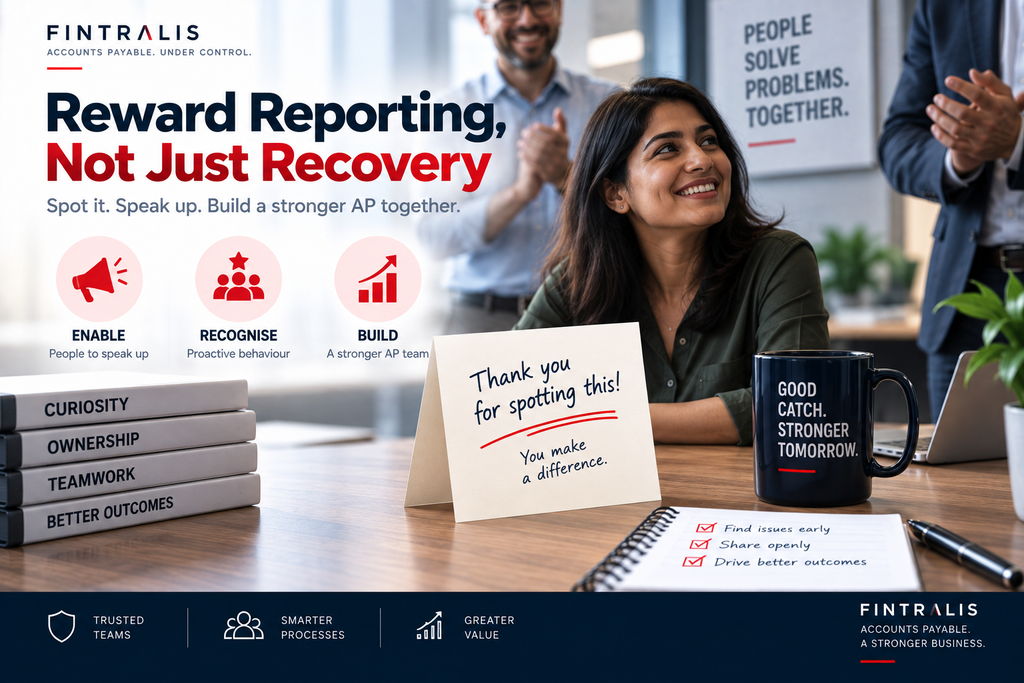
If you want people to surface issues, recognise the behaviour you want to see more of.
When an AP analyst flags a potential duplicate before it’s paid, that’s worth acknowledging—not with cash, but with visibility. A note from the CFO. A mention in a team meeting. Something that signals “this is what good looksence like.”
When a procurement lead brings forward a pricing discrepancy they discovered during a contract review, that’s recovery work even if it’s not a cheque in hand. It’s identifying leakage before it compounds.
Avoid tying incentives to the dollar value of recoveries. That creates pressure to inflate findings or pursue aggressive vendor disputes that damage relationships. The behaviour you want is accurate reporting of genuine issues. Reward that, and the dollars follow.
Build a Reporting Path That Doesn’t Trigger Scrutiny
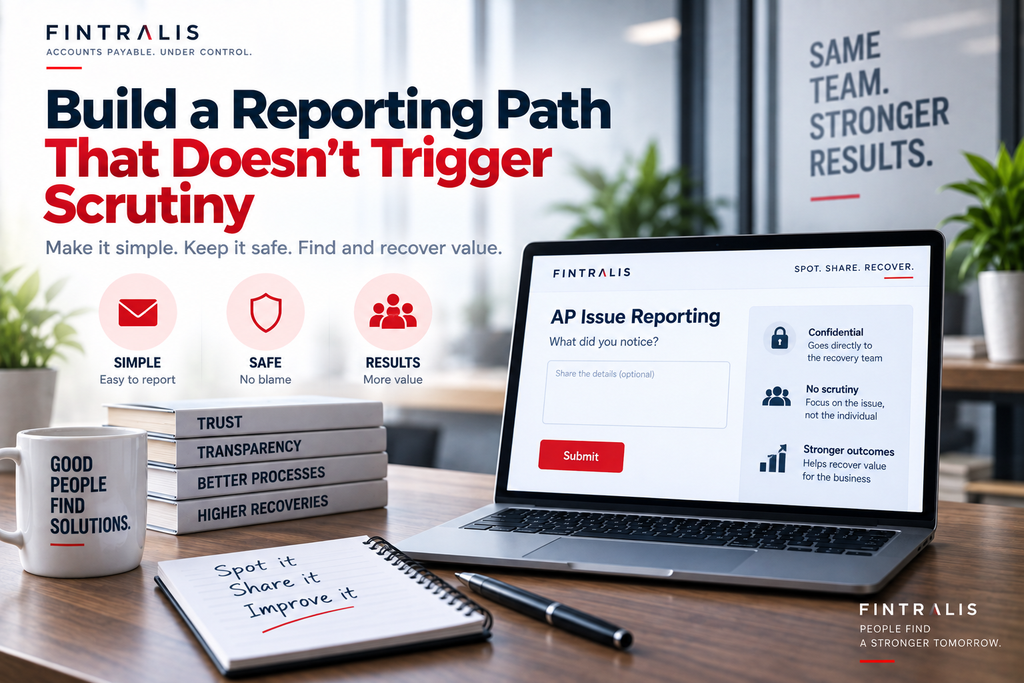
Even in a no-blame culture, people are more likely to report issues if the process is simple and doesn’t generate a lot of noise.
A shared inbox that goes directly to the recovery team—not through the controller, not through internal audit—lowers the barrier. A one-page intake form that asks “What did you notice?” rather than “Why did this happen?” keeps the focus on the issue, not the backstory.
If your recovery process requires three levels of approval and a formal variance explanation before anything gets looked at, you’ve just guaranteed that only the largest, most obvious errors will be reported. The $1,200 duplicate that someone notices in passing will never make it to your desk.
Make Recovery Part of How Finance Serves Operations

The companies that recover the most AP leakage are the ones where finance is seen as a partner in operational efficiency, not a compliance gatekeeper.
That means sharing what you find. When you recover a duplicate payment, tell the AP team what the root cause was and what you changed in the process to prevent it. When you identify a vendor who’s systematically overbilling, let procurement know so they can renegotiate or replace them.
Recovery isn’t about catching people. It’s about catching patterns. And the only way to catch patterns is to have enough data—which means enough people willing to report what they see.
If you’re a CFO or Finance Director working with SAP, Oracle or JD Edwards and you want to build a recovery programme that actually surfaces issues instead of hiding them, Fintralis runs on a 100% contingency model—you only pay on what we recover. No upfront cost, no internal blame cycles, just recovered cash and stronger processes.
Frequently asked questions
What stops operations teams from reporting duplicate payments and overpayments?
Fear of blame. When procurement or AP staff believe reporting an error will trigger scrutiny of their work or slow down vendor relationships, they stay quiet. CFOs who treat recovery as a quality process rather than fault-finding see more issues surfaced and more dollars recovered.
How do you incentivise AP recovery without creating perverse incentives?
Reward the reporting behaviour, not the dollar value of the error. Recognition for employees who flag mismatches or duplicates, regardless of amount, creates positive reinforcement. Avoid tying bonuses to recovery totals—that encourages manufactured findings or aggressive vendor disputes that damage relationships.
Does an AP recovery programme slow down vendor payments?
Not if you separate recovery from the payment cycle. Recovery work happens after payment is made, using historical data. Current invoices continue processing at normal speed. The only operational change is a checkpoint to confirm an invoice hasn’t been paid before—typically automated in modern ERP workflows.
What’s the first step to building an AP recovery culture?
Publicly commit that no one will be penalised for errors discovered in recovery work. Make this statement in writing from the CFO. Then prove it by treating the first few discoveries as process improvements, not performance issues. Actions speak louder than policy documents.
Should AP recovery sit in finance or operations?
Recovery analysis should sit in finance because it requires vendor-file access and historical payment data. But the intake process—how issues are reported and triaged—should be joint. Ops teams know why a payment happened; finance knows how to validate and recover it. Both are necessary.
How long does it take to see results from an AP recovery culture?
Most CFOs see a 30-60 day lag. Teams need proof that reporting is safe before they change behaviour. The first recovered dollar is less important than the first reported issue that’s handled constructively. Once that happens, reporting volume typically doubles within a quarter.