Your accounts payable department processes thousands of invoices. Some get paid twice. The question is how much you’ve overpaid and whether you can get it back.
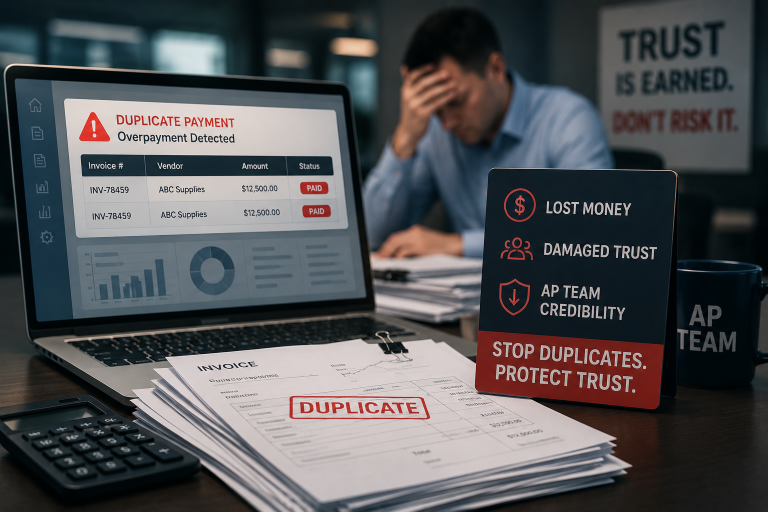
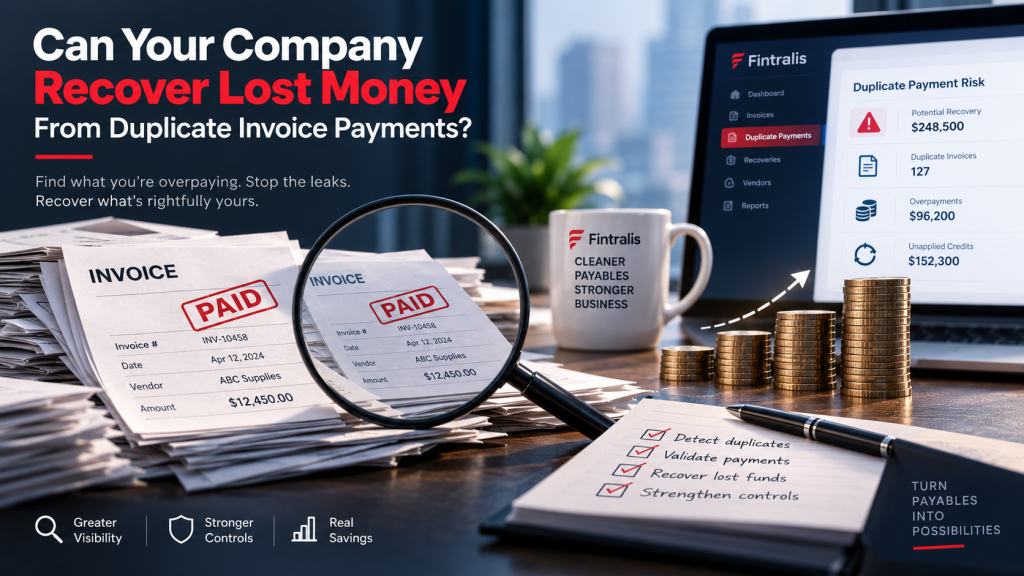
Duplicate invoice payments happen in every large organisation. An invoice arrives by email, then again through a supplier portal, or a supplier resubmits after a payment delay. Different invoice numbers, slightly different formatting, same underlying charge. Your ERP system processes both. The money leaves your account twice.
Why Standard Controls Miss Duplicates
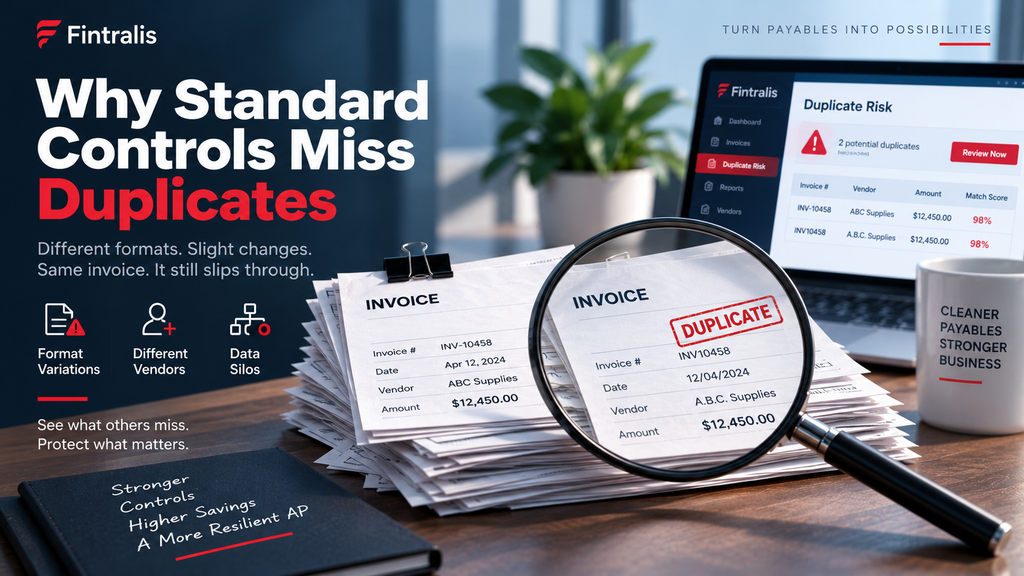
Three-way matching catches many errors, but it has blind spots. When invoice details vary slightly between submissions, your ERP may not flag the duplicate. A supplier changes their invoice numbering system. An acquisition creates two vendor master records for the same entity. A staff member keys in the same invoice under a different reference number during a system migration.
Multiple ERP instances compound the problem. If you operate SAP in three regions or run both Oracle and a legacy system during integration, duplicate detection weakens. Payment runs from different entities to the same supplier rarely cross-check each other.
Manual invoice processing increases risk. When AP staff enter invoices without system-enforced validation, duplicate detection depends on individual memory and attention. High invoice volumes guarantee some will slip through.
The Scope of AP Leakage
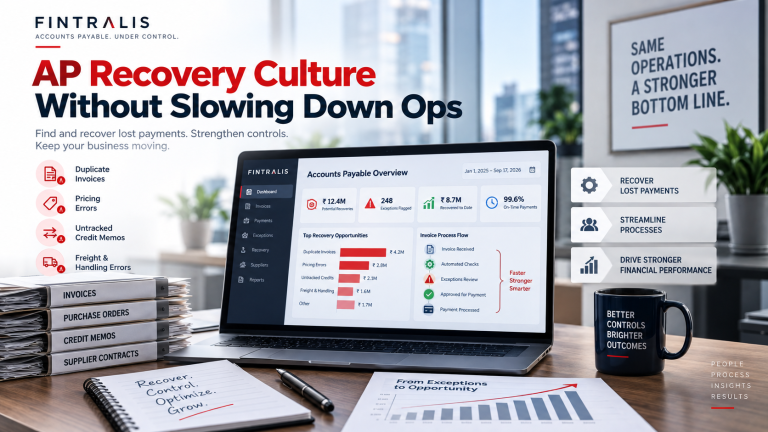
Duplicate payments are one category in a broader pattern of AP leakage. You may also be paying above contracted pricing, missing volume rebates, or failing to claim credit notes. Freight charges get duplicated. Sales tax gets calculated incorrectly. You continue paying for services after cancellation.
These errors share a common feature: they hide in transaction-level data. Month-end reviews focus on totals. Budget variance reports highlight spending trends. Neither surfaces the individual duplicate buried among thousands of line items.
What Recovery Audits Find
AP recovery audits extract your payment history and look for specific error patterns. Duplicate payments are the most straightforward category. Auditors match payments to the same supplier for identical or very similar amounts within a short timeframe. They then verify whether the charges represent two distinct obligations or one charge paid twice.
Pricing discrepancies require contract data. The audit compares what you paid against contracted rates, flagging any overcharges. Volume rebate reviews check whether you claimed all eligible rebates based on actual spend thresholds. Credit note analysis identifies supplier credits you never applied against subsequent invoices.
The process is data-intensive. Recovery specialists use pattern-matching algorithms to narrow millions of transactions down to thousands of potential findings, then manually review each one to confirm validity before presenting it to you.
The Recovery Process
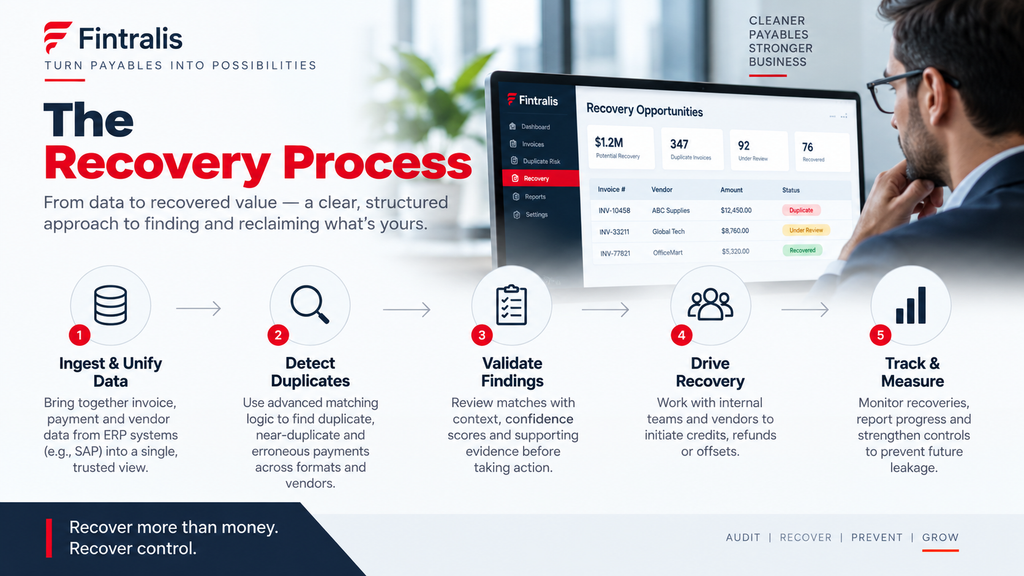
Recovery begins with data extraction. You provide payment history from your ERP system covering typically three to five years. Some firms accept direct system access, others work from file exports. The timeframe balances recovery potential against supplier statute of limitations and data retention policies.
Analysis takes weeks. Auditors categorise findings by error type and supplier. They prepare documentation showing the original payment, the duplicate payment, and evidence they represent the same obligation. This documentation becomes the basis for supplier communication.
You control the recovery approach. Most companies route findings through their existing AP team to maintain supplier relationships. Your staff present the duplicates as accounting corrections, not accusations. Suppliers typically issue credit notes without dispute when shown clear evidence.
Some duplicates are harder to recover. Suppliers may have incomplete records for older periods. Acquisitions create uncertainty about which legal entity received payment. Supplier bankruptcies eliminate recovery prospects. These factors reduce the gross recovery potential to a net recovered amount.
The Contingency Model
Most AP recovery services work on contingency. You pay a percentage of cash actually recovered, nothing for findings that don’t convert to credits or refunds. This model aligns the audit firm’s interests with yours and eliminates upfront costs.
Contingency rates vary by project complexity and recovery amount. The model works because recovery specialists focus on high-confidence findings they can document conclusively. They avoid marginal cases that might damage supplier relationships without delivering cash.
Internal AP recovery is possible but rarely happens. Your team lacks the dedicated time, the pattern-matching tools, and the experience to know where errors concentrate. They’re focused on processing current invoices, not auditing historical payments. Recovery audits complement rather than replace internal controls.
Prevention Versus Recovery
Recovering duplicates is useful. Preventing them is better. Stronger duplicate detection rules in your ERP, mandatory purchase order matching, and supplier master data governance all reduce future errors. Recovery audits often reveal control gaps worth addressing.
But perfect prevention is expensive and slows processing. Finance teams balance control strength against operational efficiency. Some leakage persists as the cost of maintaining reasonable invoice throughput. Periodic recovery audits then become a pragmatic backstop, reclaiming value from errors that inevitably occur.
If your company spends £50 million or more annually through accounts payable, a recovery audit typically finds money. The contingency model means the only cost is sharing what you wouldn’t have recovered anyway. For finance leaders tracking every margin point, it’s a straightforward decision with a quantifiable return.
Frequently asked questions
How common are duplicate invoice payments in large companies?
Duplicate payments occur in most organisations that process thousands of invoices monthly. The error rate typically ranges from 0.5% to 1% of accounts payable spend. Larger transaction volumes and multiple ERP instances increase the likelihood. Manual invoice entry, supplier portal changes, and invoice format variations all contribute to duplicates slipping through standard controls.
What causes duplicate payments in accounts payable?
Duplicate payments happen when the same invoice gets entered twice under different numbers, when a supplier resubmits after a payment delay, or when invoice formatting changes between submissions. ERP systems may not catch duplicates if invoice numbers, dates, or amounts vary slightly. Decentralised AP teams and multiple payment systems increase the risk. Supplier mergers and acquisitions also create duplicate vendor master records.
Can we recover money from duplicate payments made years ago?
Recovery depends on your supplier contracts and local limitation periods. Most companies can recover duplicates from the past three to five years. Suppliers typically issue credit notes when presented with clear payment evidence. Some contracts specify shorter timeframes. Older duplicates become harder to recover as supplier systems archive data, but many recovery audit firms work on contingency and only charge for money actually reclaimed.
How do AP recovery audits find duplicate payments?
Recovery audits extract transaction data from your ERP system and run pattern-matching algorithms to identify potential duplicates. Auditors look for identical amounts paid to the same supplier, similar invoice numbers with minor variations, and payments clustering around the same dates. They cross-reference payment records with purchase orders and goods receipts. Manual review confirms each finding before presenting it for recovery.
Do duplicate payment recoveries damage supplier relationships?
Recovering duplicate payments rarely harms supplier relationships when handled professionally. You’re simply requesting correction of an accounting error, not disputing legitimate charges. Most suppliers appreciate the accuracy and issue credit notes promptly. Recovery audit firms typically communicate findings through your AP team using your standard supplier channels. The process resembles routine invoice queries rather than adversarial collection activity.
What other AP errors can recovery audits find besides duplicates?
Recovery audits identify unclaimed volume rebates, pricing discrepancies where you paid above contracted rates, unprocessed credit notes, calculation errors on invoices, sales tax overcharges, freight charge errors, and early payment discounts missed despite timely payment. They also find obsolete supplier records where you’re still paying for cancelled services. The comprehensive review captures any situation where you paid more than contractually owed.