
Travel and entertainment expense is the second-largest controllable cost category for most mid-market and enterprise organisations. It is also the most dispersed: hundreds or thousands of employees making independent purchasing decisions under time pressure, often while dealing with flight delays, client dinners, and last-minute changes.
The result is predictable. Policy violations accumulate quietly. Duplicate submissions slip through when an employee expenses the same meal on two cards. Out-of-policy upgrades happen because the compliant option was sold out, or the traveller thought seniority granted implicit permission. Manual review catches some of this, but not systematically, and always after the fact.
The Cost of Post-Transaction Oversight

Most finance teams discover T&E problems during monthly close or annual audit. By then, payment has cleared, the receipt is three months old, and the employee has moved to another project. Clawing back a sixty-dollar dinner is not worth the political friction. Multiply that decision across hundreds of reports and the leakage becomes structural.
The traditional control is manager approval before reimbursement. In practice, managers approve in bulk, fatigued by volume and trusting their teams. A senior leader might sign off on two hundred line items in five minutes while preparing for a board meeting. The approval step becomes ceremonial, a check box rather than a checkpoint.
Even conscientious managers have no reliable way to spot duplicates, validate exchange rates, or flag receipts that have been submitted before. They are approving narrative descriptions and scanned images, not structured data tied to transaction logs.
Pre-Transaction Controls That Actually Work
Effective T&E control moves enforcement upstream. The goal is to make non-compliant spending difficult to execute in the first place, rather than difficult to hide after the fact.
Virtual Cards With Category and Merchant Restrictions

Issue single-use or trip-specific virtual cards that decline transactions outside approved categories. A card generated for a two-day client visit in Chicago can be restricted to airfare, hotels, ground transport, and restaurants, with a cumulative spending cap. Purchases outside those parameters fail at point of sale. The employee knows immediately and adjusts behaviour before the expense is incurred.
This approach eliminates entire classes of violation without requiring manager intervention. It also removes ambiguity. The employee is not guessing whether a particular restaurant tier is allowed; the card either works or it does not.
Hierarchical Approval Routing Based on Amount and Context
Not every expense requires the same scrutiny. A fifteen-dollar airport sandwich does not need director sign-off. A three-thousand-dollar client dinner does. Automated routing sends low-value, in-policy expenses straight to reimbursement and escalates outliers to the appropriate level of authority.
This concentrates management attention where it matters. Instead of reviewing everything superficially, managers review exceptions carefully. Speed improves for compliant employees. Friction increases only for genuine outliers.
Receipt Capture at Point of Purchase
Requiring employees to photograph receipts immediately, while still at the restaurant or in the taxi, reduces submission lag and prevents loss. The timestamp and geolocation data embedded in the image create a contemporaneous record that is harder to manipulate later. Employees are also far less likely to submit the same receipt twice when the capture happens in real time, tied to a specific transaction.
Integration with card networks allows the system to match the receipt image to the cleared transaction automatically. Missing receipts trigger reminders within hours, not weeks, and employees can resolve the gap while the details are still fresh.
Integration With Core ERP Systems
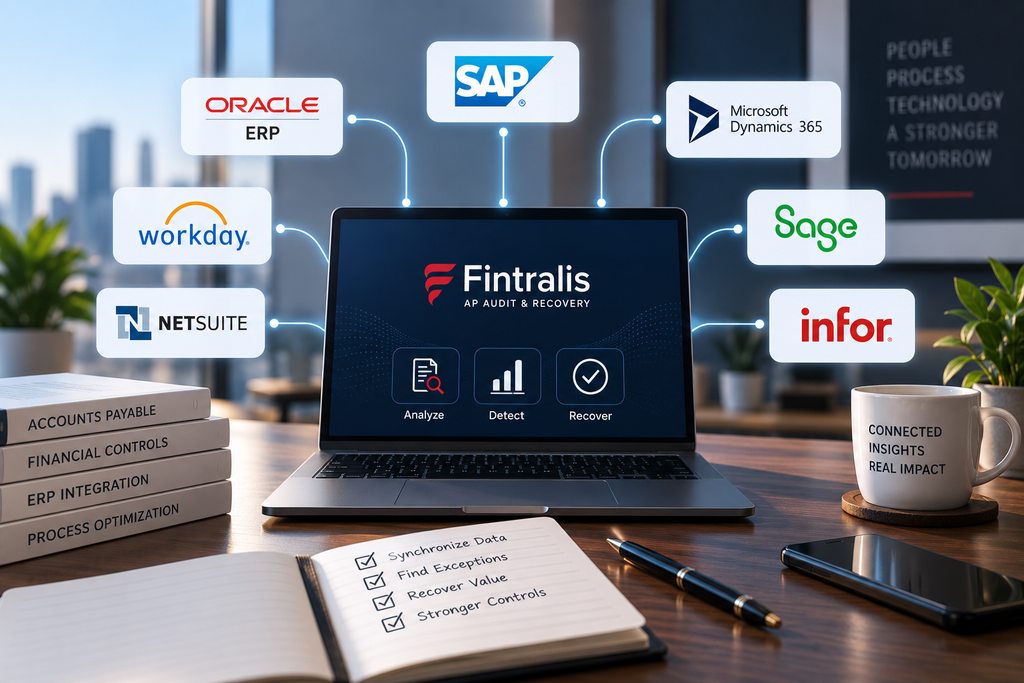
A standalone expense tool creates an isolated data silo. Transactions approved in the expense platform must be manually keyed into SAP, Oracle, or JD Edwards for actual payment and general ledger posting. This dual-entry process introduces error, delay, and reconciliation overhead.
Direct integration writes approved expenses into the ERP as standard payables. They flow through the same three-way match, accrual, and cash application logic as any vendor invoice. Finance teams reconcile one ledger, not two. Close cycles shorten because T&E is already in the books, not waiting in a separate queue for manual upload.
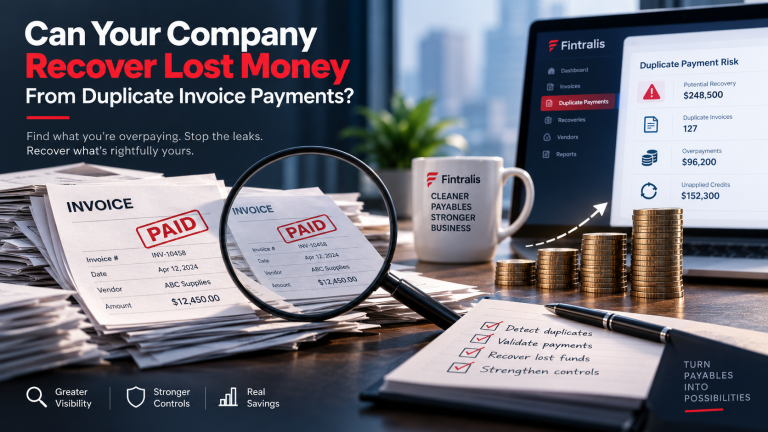
Integration also surfaces duplicate payments that span systems. An employee who expenses a hotel stay on a personal card and later discovers the company was billed directly creates a duplicate that may not surface until an annual audit—or not at all. Automated cross-referencing between card transactions, expense submissions, and direct supplier invoices flags these overlaps immediately.
Why Retroactive Recovery Still Matters
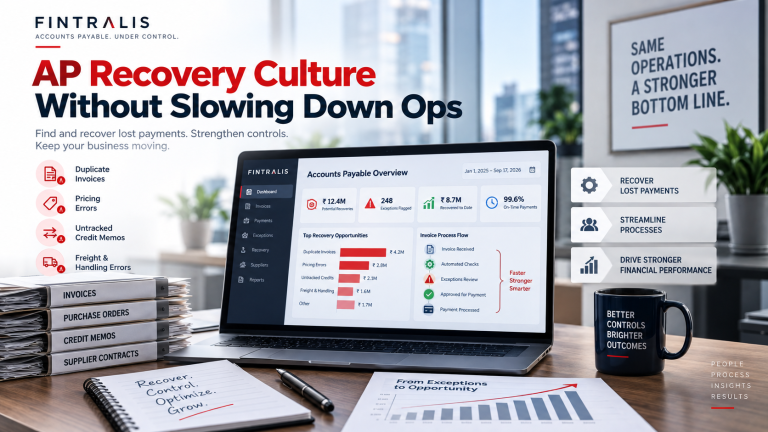
Even with strong forward-looking controls, historical spend contains recoverable value. Policies were looser two years ago. Systems were less sophisticated. High transaction volume meant some duplicates and out-of-policy items were never caught.
A systematic review of past T&E often uncovers patterns: the same hotel invoice submitted by two attendees of the same conference, upgraded seat charges that exceeded policy limits, foreign transaction fees that should have been avoided, and expenses approved after an employee’s termination date.
Recovery work is time-intensive and requires forensic attention that most finance teams cannot spare. That is the value of a contingency model: the work happens without pulling your analysts off the current close, and you only pay when funds are actually recovered.
Fintralis operates on a 100% contingency basis for companies with at least fifty million in annual accounts payable spend. We work within SAP, Oracle, and JD Edwards environments, identifying duplicate payments, overpayments, and unclaimed credits across your entire AP history, including T&E. We recover the funds, you keep the majority, and your team stays focused on forward operations.
Frequently asked questions
What are the most effective controls for managing travel and entertainment expenses?
Pre-transaction controls work better than post-transaction review. Virtual cards with category restrictions, automated receipt capture at point of purchase, and hierarchical approval workflows based on dollar thresholds prevent non-compliant spending before it clears. The goal is to make the compliant path the easiest path.
How can we reduce T&E spend without harming employee morale or business development?
Replace blanket cuts with tiered policies tied to trip purpose and role. Sales and senior leadership get broader parameters; internal meetings get tighter limits. Automate the easy approvals so managers focus only on outliers. Fast reimbursement matters more to morale than generous limits.
What role should expense management software play in controlling T&E costs?
Modern platforms shift enforcement upstream. They block out-of-policy bookings before purchase, flag duplicate expenses in real time, and route exceptions to the right approver instantly. The value is in prevention and speed, not in generating reports that describe last quarter’s problems.
How do you handle T&E expenses in companies using SAP or Oracle ERP systems?
Integration is critical. Your expense platform should write directly into the ERP so transactions flow through standard AP workflows and reconciliation happens in one ledger. Standalone expense tools create shadow records that someone has to manually marry back to the GL each close.
Why do companies often find duplicate payments or policy violations in historical T&E spend?
High transaction volume and decentralised approval create gaps. Duplicate submissions across personal cards and corporate accounts, stale receipts resubmitted months later, and minor policy breaches that fall below manager attention thresholds all add up. Retroactive audits frequently recover meaningful sums because real-time controls were absent or poorly enforced.