
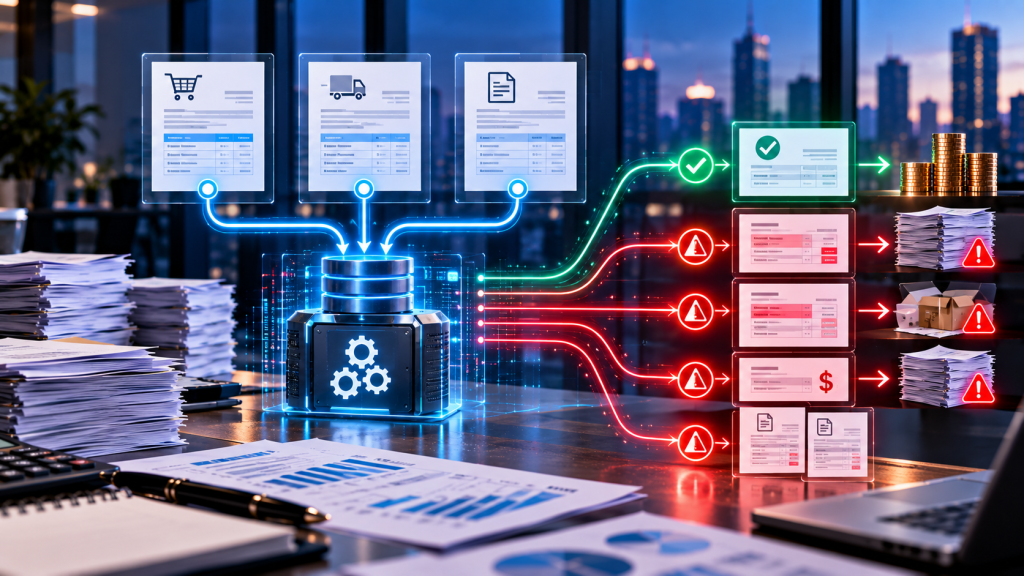
Three-way matching in SAP is supposed to prevent payment errors. The system compares the purchase order, goods receipt, and vendor invoice before releasing funds. When all three align, payment happens automatically. When they don’t, the invoice blocks until someone investigates.
In practice, blocked invoices pile up. Approvers face pressure to clear backlogs. Tolerance settings get widened. Manual releases become routine. The control that should catch errors becomes the path around them.
What Causes Three-Way Match Failures
Most match failures stem from predictable operational gaps. Partial shipments arrive but goods receipts aren’t updated. Vendors bill against outdated PO line items after pricing amendments. Unit-of-measure mismatches occur when purchase orders specify cases but invoices bill eaches. Freight and handling charges appear on invoices but weren’t included in the original PO value.
None of these scenarios are unusual. In high-volume environments they happen constantly. The question isn’t whether exceptions occur, but how your organization handles them when they do.
The Hidden Cost of Tolerance Settings
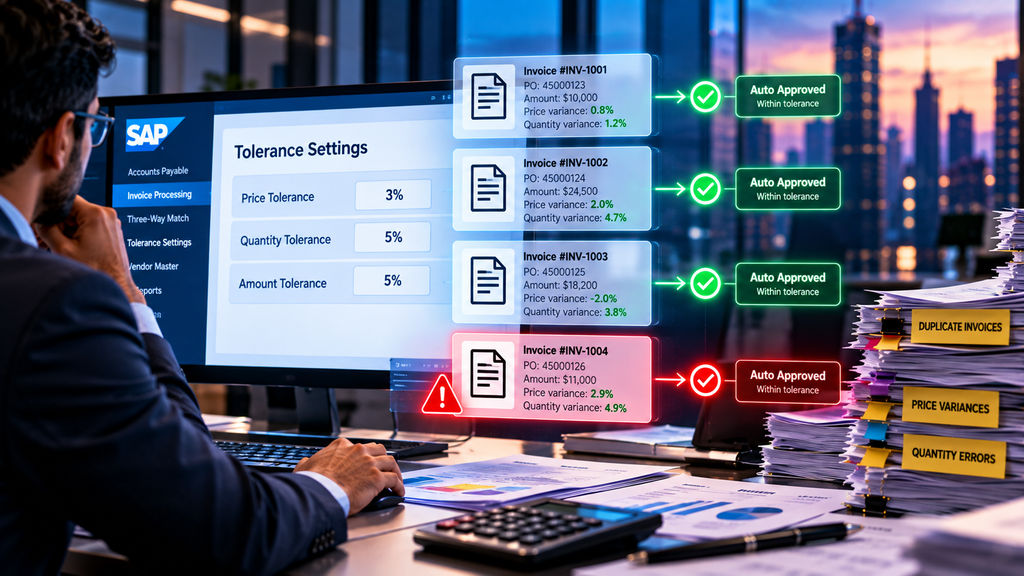
Tolerance parameters in SAP define acceptable variance before blocking an invoice. Set a three percent price tolerance and a five percent quantity tolerance, and any invoice within those boundaries posts without review.
Tight tolerances create excessive blocks and frustrated vendors. Loose tolerances let errors through. Finance teams adjust settings trying to balance control and efficiency, usually landing somewhere that satisfies neither.
The real problem isn’t the setting itself. It’s that tolerance creates a grey zone where incorrect payments look legitimate. A duplicate invoice priced two percent lower than the original passes through automatically. An invoice for goods never received but showing quantities within tolerance gets paid. The three-way match ran. The system said yes. No one looks closer.
Manual Release as Systematic Risk
When invoices block, someone has to release them. That person sees the mismatch, makes a judgment call, and either sends the invoice back to the vendor or forces it through with an override code.
This decision happens without full context. The approver doesn’t know if this vendor was paid twice last month under different invoice numbers. They can’t see that a similar PO was closed and a new one issued with updated pricing. They’re looking at one transaction in isolation, often with a dozen more waiting behind it.
Manual release isn’t a control. It’s a workaround that creates the appearance of review while moving the invoice into the payment queue. High release rates signal either tolerance problems or master data issues, but both conditions increase the likelihood that duplicates and errors are being released alongside legitimate exceptions.
Where Duplicate Payments Hide
Standard duplicate payment controls check invoice numbers and amounts within vendor accounts. They catch identical resubmissions. They miss variations.
A vendor submits an invoice that blocks on quantity variance. They resubmit with adjusted line items and a new invoice number. Both invoices reference the same PO and delivery. One was released manually during the backlog push before month-end. The other posts automatically after the vendor’s adjustment. Same goods, paid twice, no identical invoice number to trigger a flag.
Another pattern: goods receipts posted in error, then reversed and re-entered correctly. Invoices arrive matching both the original incorrect receipt and the corrected one. The PO shows sufficient open quantity to cover both because the reversal happened in a prior period. Both invoices clear three-way match. Both get paid.
What Finance Teams Miss in Standard Reports

SAP provides exception reports showing blocked invoices and match variances. These reports tell you what’s waiting, not what already went through. They show current state, not pattern.
To find what tolerance settings and manual releases actually cost, you need to reconstruct payment history across the full population: which invoices posted automatically within tolerance, which required release, which vendors generated the most exceptions, which approvers released the most blocks, and whether released invoices later showed duplicate or erroneous payment patterns.
That analysis requires linking payment data back through invoice verification to goods receipts and purchase orders, then comparing the result against vendor master data and payment terms. Most finance teams lack either the tools or the time to perform that work at scale.
The Recovery Opportunity
Payments released outside tolerance limits represent a concentrated risk pool. When exceptions become routine, duplicates and overpayments hide in plain sight. The system flagged them once. Someone overrode that flag. No subsequent control exists.
Organizations that audit their three-way match exception history typically find recoverable amounts in vendor accounts that appeared clean in standard reporting. The payments were authorized, properly coded, and passed all automated checks. They were also wrong.
Recovery doesn’t require changing your tolerance settings or exception workflow. It requires looking at what those processes already let through and identifying the subset that shouldn’t have been paid. That work is detailed, technical, and specific to how your organization configured SAP and trained your AP team.
If your three-way match exception volume runs above five percent of invoice count, or if manual release rates climbed over the past two years, you’re carrying risk in closed periods that standard controls won’t surface. A recovery audit quantifies that risk and converts it back to cash.
Frequently asked questions
What is a three-way match in SAP?
A three-way match in SAP automatically compares the purchase order, goods receipt, and vendor invoice to confirm quantities and prices align before releasing payment. When all three documents match within tolerance, the invoice posts without manual intervention. Mismatches trigger exceptions that require investigation or override.
Why do three-way match failures happen in SAP?
Three-way match failures occur when invoice quantities or prices differ from the original purchase order or recorded goods receipt. Common causes include partial deliveries not updated in the system, pricing changes after PO creation, unit-of-measure mismatches, and vendors billing against outdated PO line items.
What is tolerance in SAP invoice matching?
Tolerance in SAP defines the acceptable variance between documents before blocking an invoice. Organizations set percentage or absolute value thresholds for price and quantity differences. Invoices within tolerance post automatically. Those outside tolerance require manual release, creating opportunities for error and duplicate payment.
How do manual invoice releases create duplicate payment risk?
When invoices fall outside tolerance limits, approvers manually release them without full transaction history or visibility into similar recent payments. Time pressure and high volumes mean releases happen with minimal review, allowing duplicates under different invoice numbers or PO references to pass through undetected.
Can you recover payments from three-way match failures?
Yes. Many payments released outside match tolerances or after manual override represent recoverable duplicates, overpayments, or pricing errors. Specialized recovery audits reconstruct payment patterns across PO and non-PO invoices to identify where exceptions masked duplicate or incorrect payments that standard controls missed.
How often should you audit three-way match exceptions?
Organizations with high AP volumes should audit three-way match exceptions quarterly at minimum. Exception volumes that consistently exceed five percent of total invoices indicate tolerance settings too tight or master data quality issues. Both conditions increase duplicate payment risk and require immediate attention.